
Choosing the best Standard Insulator in 2026 depends on where and how it will be used. A component suited to an indoor switchgear cabinet may not perform well on an exposed distribution line. Voltage, mechanical loading, pollution, humidity, temperature changes, and maintenance access all matter. There is no universal winner.
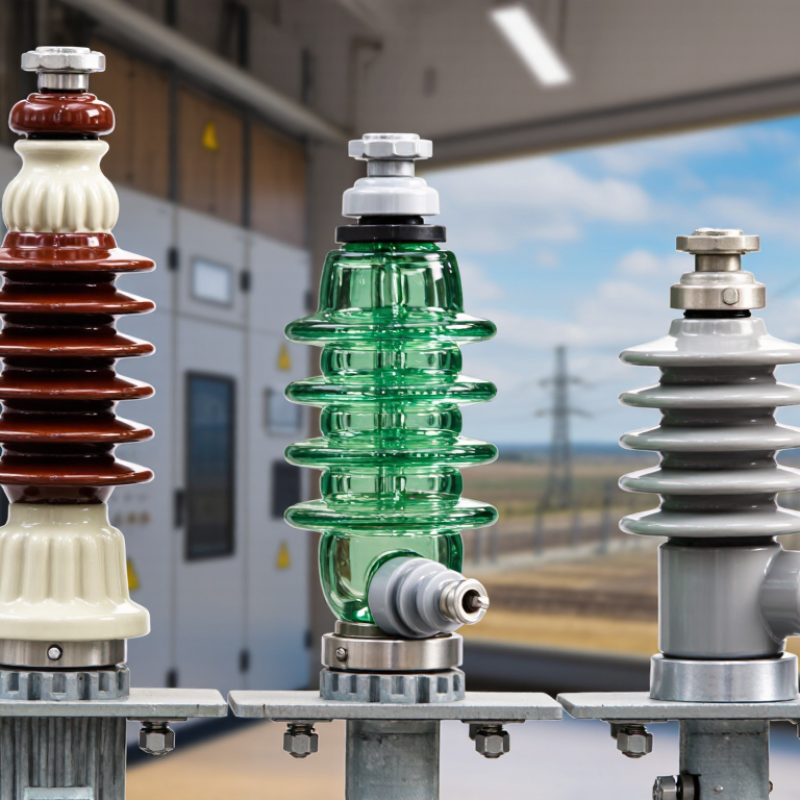
Porcelain, glass, and polymer designs each bring different trade-offs. Porcelain has a long service history and a rigid, familiar form. Glass can make surface damage easier to spot, though handling and site conditions still matter. Polymer insulators are lighter and may suit locations where weight or installation access is a concern. Their performance depends on design quality, material condition, and environmental exposure. Small details count. Salt deposits, cracked sheds, loose fittings, or a poorly matched creepage distance can affect reliability.
A practical comparison should start with the equipment rating and the manufacturer’s technical data. Check the intended application, mechanical strength, dimensions, operating environment, and relevant industry standards. Then consider inspection needs, replacement access, and the experience of the utility or installer. A product brochure alone is not enough; field history and qualified engineering review provide useful context. Even a careful selection can involve uncertainty, especially as products and operating conditions change. That part deserves an honest look. This guide examines the main insulator types and the questions buyers should ask before choosing one for 2026.
“Best” depends on the insulator’s construction and duty, not on a single standard winning across the board. IEC 60383 covers ceramic and glass insulators for overhead lines above 1,000 volts, including product requirements and testing. IEC 61109 addresses composite suspension and tension insulators for AC overhead lines above 1,000 volts. IEEE C29 is a family of standards, so specify the applicable document for the product type rather than citing “C29” alone. These standards are not interchangeable labels.
Start with the line design: operating voltage, mechanical loads, pollution exposure, and the structure’s hardware interfaces. Then match the insulator type to the applicable standard and confirm that test reports cover the exact design being purchased. On a coastal route, for example, salt deposits and wet weather can make creepage distance a practical concern; a catalog value alone cannot settle the choice. Check dimensions, fittings, and acceptance criteria against the project specification. Small mismatches matter. The uncomfortable detail is that a compliant unit can still be a poor fit for a particular line. In 2026, verify the editions named in the contract and the utility’s requirements; standards can be revised, and procurement habits sometimes lag.
For a 2026 insulator choice, voltage alone is not enough. Check the system’s highest operating voltage, insulation coordination, and required creepage distance. Pollution, altitude, and wetting can change surface performance. A selection that works on a clean test bench may struggle beside a coastal road. Details matter.
Porcelain is rigid and familiar in many networks, but it is heavy and can fracture under impact. Toughened glass is also rigid; damage is often easier to spot because a failed unit may shatter visibly. Silicone composite insulators are lighter and their hydrophobic surface can help in polluted conditions. They still need suitable design, inspection, and aging assessment. No material wins everywhere.
Compare SML, or specified mechanical load, against actual line tension, wind, ice, and installation loads. SML is a product rating, not a simple measure of material strength, so verify the test basis and safety margin with the project engineer. Higher voltage may require different insulation dimensions, but it does not automatically mean a higher SML. That shortcut is tempting. I would not use it. A practical shortlist starts with voltage and environment, then checks SML, fittings, maintenance access, and failure consequences. The awkward part is that site data is sometimes incomplete; record assumptions rather than treating them as facts.
| Comparison factor | Porcelain | Toughened glass | Silicone composite |
|---|---|---|---|
| Typical construction | Glazed ceramic body; used in pin, post, and suspension designs. | Toughened-glass disc units, commonly assembled into suspension strings. | Silicone-rubber weather sheds over a fiberglass-reinforced polymer core. |
| Typical voltage applications | Used from distribution networks through high-voltage transmission. The suitable rating depends on insulator design, string length, and system requirements. | Used from distribution and subtransmission through high-voltage transmission, most often as disc strings. | Used from distribution through high-voltage transmission, including compact or pollution-exposed line applications. |
| Representative SML classes | Suspension or long-rod designs are commonly specified in mechanical-load classes such as 70, 120, 160, 210, or 300 kN. | Common cap-and-pin disc classes include 40, 70, 120, 160, 210, and 300 kN per unit, depending on design. | Long-rod composite designs are commonly offered in specified mechanical-load classes, often around 70–300 kN, depending on the product design. |
| How voltage rating is determined | By the complete insulator arrangement and electrical design, including creepage distance, insulation level, and operating conditions—not by material alone. | By the number and type of discs in the string, their spacing, creepage distance, and the required insulation level. | By the unit’s electrical design, housing profile, creepage distance, core length, and specified system conditions. |
| Pollution and wet-weather performance | Glazed surfaces provide a durable insulating surface; pollution performance depends on profile, creepage distance, and maintenance. | The smooth glass surface can be relatively easy to inspect and clean; pollution performance still depends on string design and site conditions. | Hydrophobic silicone surfaces can help limit formation of continuous conductive water films; performance depends on material condition and contamination. |
| Inspection characteristics | Internal damage may not always be visible, so inspection methods and maintenance practices matter. | Breakage is often visually apparent because a damaged disc may lose its glass shell, but the string still requires inspection. | Requires checks for housing damage, tracking, erosion, and signs of core or end-fitting problems. |
| Common advantages | Long-established technology, rigid construction, and broad experience across utility applications. | Visible evidence of many types of unit damage and consistent properties in properly manufactured units. | Low weight relative to many traditional designs and useful hydrophobic behavior in suitable pollution conditions. |
| Key selection consideration | Consider mechanical loading, brittle-material handling, pollution severity, and the inspection plan. | Consider disc-string weight and length, unit condition monitoring, pollution severity, and mechanical load. | Consider long-term housing condition, material quality, UV and environmental exposure, and inspection requirements. |
| Best fit when | A proven rigid ceramic solution and established maintenance practices suit the project. | Disc-string construction and readily observable damage are priorities. | Lower assembly weight or hydrophobic surface behavior is valuable for the site and design. |
Note: SML means Specified Mechanical Load. The listed values are representative rating classes, not a guarantee for every product or design. SML is not directly comparable across different insulator types or configurations; confirm the applicable standard, test basis, voltage class, creepage distance, and complete assembly rating with the project specification.
Which Standard Insulator Is Best in 2026?
The best choice depends on site pollution, not a product label. IEC 60815-1:2008 sets reference unified specific creepage distances for five pollution classes: 22, 27.8, 34.7, 43.3, and 53.7 mm/kV, from very light to very heavy. Treat these as design reference values, not guaranteed field performance. Engineers still need site evidence, including salt deposits, industrial dust, fog, and rain patterns.
Altitude needs a separate check. Thinner air reduces external insulation withstand, so IEC 60071-2 altitude corrections should inform insulation coordination; do not simply add creepage distance by guesswork. A high plateau can combine low air density with dust and dry spells. That combination matters. In practice, pollution surveys and operating records help classify severity, though neither captures every wetting event. I would review the assumptions again after the first season; field conditions can be messier than the map suggests.
Tips: Start with the IEC 60815 pollution class, then verify altitude-related withstand and profile suitability. Record the assumed site conditions. If those assumptions are weak, the creepage calculation is weak too.
Choosing the best standard insulator in 2026 starts with test conditions, not a headline voltage rating. A rating without its test conditions is hard to compare. IEC 60060-1 defines the standard lightning impulse as a 1.2/50 μs wave: a 1.2 μs front and 50 μs time to half-value. Check that the datasheet reports the actual withstand level and test configuration. A number alone can hide important differences.
For ceramic and glass insulators, IEC 60383-1 describes wet power-frequency and mechanical tests. Its wet withstand procedure uses a one-minute test under specified conditions. Confirm the test voltage, frequency, and wetting conditions, rather than assuming a dry result is equivalent. Mechanical ratings need equal care: compare the specified mechanical failing load in kilonewtons with the project’s actual loading and safety criteria. It is not automatically a permissible continuous working load.
Look for the standard and edition, specimen type, pass criteria, and laboratory test report. For composite insulators, check that the cited test standard covers that construction; ceramic and glass procedures may not apply. CIGRE’s technical guidance on overhead-line insulation also emphasizes pollution and environmental exposure, so clean, dry laboratory results do not tell the whole service story. I would still question a beautifully formatted datasheet with no traceable test record. Small detail. Rain, salt, and installation geometry can change the real margin.
A useful ranking starts with the site, not the catalogue. IEC TS 60815-1:2008 defines five site pollution severity classes, from very light to very heavy. That classification helps engineers assess contamination before setting creepage distance or choosing a material. CIGRE Technical Brochure 481 likewise addresses insulator selection for polluted conditions. Neither supports a universal failure-rate winner; local operating records matter.
For high-pollution sites, silicone composite insulators can reduce routine washing because their hydrophobic surfaces resist wetting. They are also lighter, easing transport and installation. But they need careful checks for surface erosion, damaged seals, and hidden core deterioration. Porcelain and toughened glass offer long service histories and straightforward visual inspection. Both are heavier, and brittle damage can mean replacement rather than repair. Glass breakage is often easier to spot from the ground.
Lifecycle cost changes with access. A remote, salty ridge may favor lighter composites and fewer cleaning visits; a site with easy access may favor inspectable glass or porcelain. Compare purchase price, washing frequency, crew access, outage exposure, and replacement logistics over the expected service life. Visibility matters. That ranking is imperfect: inspection quality varies, and utilities do not always record failure causes consistently. Use local contamination measurements and maintenance history before treating any material as the low-risk choice.
No. Check the system’s highest operating voltage, insulation coordination, and creepage distance. Pollution, altitude, and wetting also affect surface performance. A clean test bench is not a coastal road.
Porcelain is rigid and familiar, but heavy and vulnerable to impact. Toughened glass is rigid too, and breakage is often visible. Silicone composite insulators are lighter and can resist wetting in polluted conditions. No universal winner.
Specified mechanical load is a product rating, not a complete measure of material strength. Compare it with line tension, wind, ice, and installation loads. Verify the test basis and safety margin with the project engineer.
No. Higher voltage may call for different insulation dimensions, but it does not automatically raise SML. That shortcut is tempting. I would avoid it.
Silicone composite insulators can reduce washing in polluted areas because their hydrophobic surfaces resist wetting. They still need checks for erosion, damaged seals, and possible core deterioration. Not maintenance-free.
Porcelain and toughened glass have long service histories and are generally straightforward to inspect visually. Glass breakage may be easier to spot from the ground. Hidden damage still deserves attention.
Include purchase price, washing frequency, crew access, outage exposure, and replacement logistics. A remote, salty ridge may favor lighter composites. Easy site access can make glass or porcelain more practical. Local records matter.
Not reliably without site conditions and operating records. Use contamination measurements and maintenance history, while noting uncertain assumptions. Failure data can be incomplete. Inspectors may also differ.
Choosing the best Standard Insulator in 2026 requires matching the application to the relevant requirements of IEC 60383, IEC 61109, and IEEE C29. Porcelain, toughened glass, and silicone each offer different advantages, so selection should consider operating voltage, specified mechanical load (SML), environmental exposure, and maintenance expectations—not material alone.
IEC 60815 provides a basis for selecting creepage distance according to pollution severity, with altitude also considered where it affects insulation performance. Before finalizing a design, verify wet power-frequency and lightning-impulse withstand ratings alongside mechanical test results. A useful comparison weighs the likelihood and consequences of failure, inspection and cleaning needs, expected service life, and total lifecycle cost. This approach helps identify an insulator suited to the line conditions while balancing electrical reliability, mechanical strength, and long-term maintenance demands.
