
China has become a major sourcing base for reliable Insulator Suspension products. Its manufacturers serve transmission, substation, railway, and renewable energy projects worldwide. The strongest suppliers combine ceramic, glass, or composite materials with controlled production processes. They also understand that a suspension insulator must withstand mechanical tension, electrical stress, pollution, moisture, and sudden temperature changes.
Dr. R. S. Gorur, a respected power-insulation specialist, has stated, “Outdoor insulation performance is inseparable from its environment.” This principle remains highly practical. A suspension string installed near a coastal plant faces salt deposits and wind-driven moisture. A unit used in an industrial zone may require better pollution resistance and longer leakage distance. Product selection cannot depend on catalog voltage alone. Field conditions matter.
China’s best Insulator Suspension manufacturers normally provide design support, type-test documentation, factory inspections, and traceable quality records. Buyers should examine tensile strength, puncture resistance, hardware protection, aging performance, and compliance with relevant IEC standards. Factory experience is valuable, but it does not replace independent verification. A polished website proves little.
Some suppliers offer excellent pricing but limited technical follow-up. Others provide strong engineering support but longer delivery schedules. That trade-off deserves honest review. Even experienced buyers can overlook corrosion on fittings or installation torque requirements. The safest choice is a supplier that communicates clearly, documents limitations, and supports performance after delivery. Reliability is built through evidence, not promises.
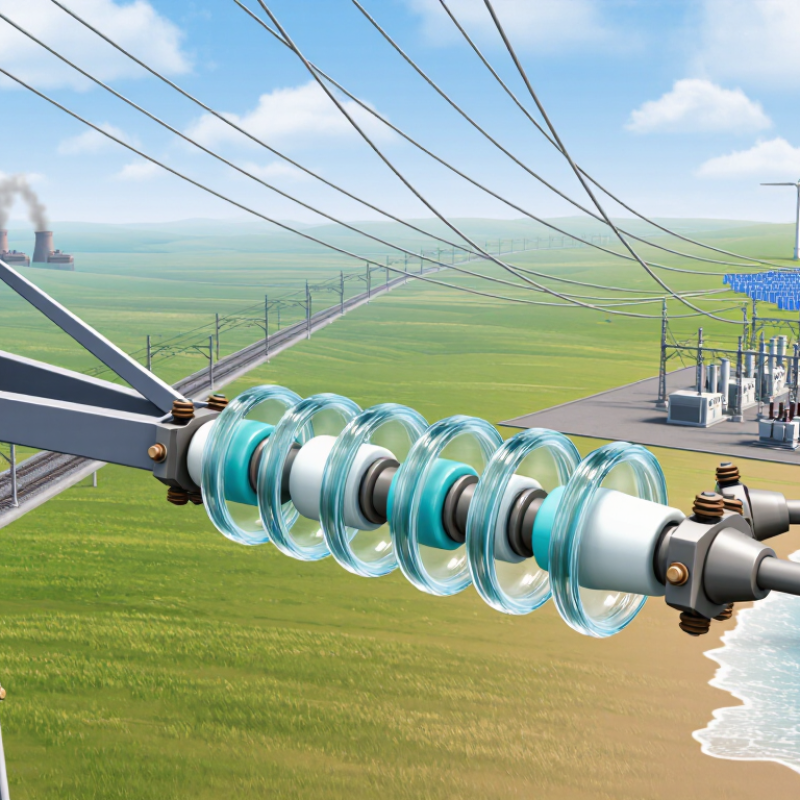
China’s power networks use several suspension insulator designs for different voltage and environmental demands. Cap-and-pin disc strings remain common on overhead transmission lines. Their modular structure allows crews to adjust insulation length easily. Porcelain and toughened glass versions offer visible damage inspection, although heavy handling can slow installation. Long-rod insulators provide a compact alternative, especially where tower clearances are limited. Composite suspension insulators use a fiberglass core and a weather-resistant polymer housing. They are lighter and perform well in polluted or coastal areas.
Design selection depends on voltage, contamination, wind, ice, and mechanical loading. Fog-type discs provide longer leakage distances for industrial pollution and salt exposure. Double or V-shaped suspension strings improve conductor stability on busy corridors. In practice, the fitting layout matters as much as the insulator body. A catalogue choice can look correct, yet fail under unusual ice or uneven pollution. Field experience should challenge laboratory assumptions. No single type is perfect.
Tips: Check leakage distance, rated mechanical load, corona control, and hardware compatibility before approval. Inspect sheds for cuts, tracking, and loose fittings during maintenance. Composite units need careful storage because damaged housings may be difficult to notice. Keep records of weather, pollution, and previous faults. These details often reveal whether the selected suspension type truly matches the line.
Reliable Chinese insulator manufacturers combine verified engineering with disciplined production. China’s National Energy Administration reported 2.92 billion kilowatts of installed generation capacity in 2023. That expanding network increases demand for dependable suspension insulators.
Look for manufacturers that design against IEC 60383 and IEC 61109 requirements. Their products should show documented mechanical, electrical, and ageing tests. Factory audits should examine porcelain or composite materials, galvanizing thickness, crimping quality, and pollution-performance data. Traceability matters. Each batch should connect to raw-material records, inspection results, and final test certificates.
Small details matter.
Real experience is visible in field feedback. Ask for installation records across coastal, industrial, and high-altitude environments. CIGRE technical guidance repeatedly highlights contamination, moisture, and line hardware coordination as major reliability factors. A capable supplier can explain creepage distance without vague claims. It should also provide drawings, packing standards, replacement guidance, and responsive technical support.
No factory is flawless. A credible one admits process limits and explains corrective actions. That honesty is valuable. Some suppliers still present impressive test reports but offer weak field evidence. Buyers should compare samples, audit procedures, and verify certificates independently. Consistent quality, clear communication, and practical engineering support separate reliable manufacturers from low-cost sellers.
Reliable suspension insulators begin with controlled materials and measurable production standards. Manufacturers should verify porcelain, glass, cement, metal fittings, and galvanizing quality before assembly. Dimensional checks confirm creepage distance, pin alignment, and coupling accuracy. Mechanical tests then examine tensile strength, impact resistance, and load performance. Electrical inspections include dry and wet power-frequency tests, impulse withstand tests, and leakage checks. Standards such as IEC 60383 and ISO 9001 provide useful reference points, but documented factory procedures remain essential.
Quality control must continue beyond final testing. Technicians can record kiln temperatures, curing times, coating thickness, and tightening torque for every batch. Serial numbers improve traceability from raw materials to shipment. A sample should also undergo thermal cycling and visual inspection for cracks, chips, uneven cement, or loose fittings. No process is flawless. Human inspection may miss a small defect, especially during busy production periods. For that reason, calibrated instruments, independent testing, and regular process audits should work together. Supplier evaluation should include test reports, corrective-action records, and evidence of consistent delivery performance.
Tips: Ask for recent type-test and routine-test records. Check how failed units are isolated and investigated. Visit the inspection area if possible. Small details matter.
China Best Insulator Suspension Manufacturers and Suppliers
How to Evaluate China-Based Insulator Suppliers
Evaluating a China-based insulator supplier requires more than comparing quotations. I examine manufacturing experience, product records, and evidence of process control. The supplier should explain its porcelain, glass, or composite material clearly. Vague answers deserve attention. Ask for drawings, technical data, and test reports linked to specific production batches. Confirm that testing follows the required IEC or national standards for your project.
A factory audit can reveal practical details. Check molding equipment, glazing areas, curing controls, and storage conditions. Look for clean workspaces and protected finished insulators. Review how workers identify cracks, surface defects, and dimensional errors. Request a sample inspection before placing a large order. Measure key dimensions yourself when possible. A polished factory tour is useful, but it does not prove consistent quality.
Traceability matters. Each shipment should connect to production dates, inspection records, and packing lists. Discuss salt fog, mechanical load, electrical, and thermal tests based on the installation environment. Ask how the supplier handles failed samples, delayed shipments, and replacement requests. Communication speed is also evidence of reliability. However, fast replies can hide weak engineering. No audit is perfect. I would use an independent inspection when project risk, voltage level, or delivery value is high. Clear contracts should define tolerances, documents, packaging, and acceptance procedures before production begins.
Use this weighted evaluation framework when comparing suspension insulator suppliers. The criteria reflect common utility procurement priorities, including technical compliance, testing evidence, quality systems, traceability, and export readiness.
Interpretation: Technical compliance and documented type testing should receive the highest priority because they directly affect electrical performance and grid reliability. Factory quality control, material traceability, and delivery capability help reduce long-term operational and supply-chain risks.
Suspension insulators support reliable overhead transmission across changing climates and voltage levels. The IEA Electricity 2024 report forecasts global electricity demand to grow by about 3.3% annually through 2026. That expansion will increase demand for carefully engineered grid components.
Experienced manufacturers assess conductor weight, wind load, pollution severity, altitude, and creepage distance before recommending a design. Ceramic, glass, and composite options behave differently in coastal salt, industrial dust, and freezing weather. Testing should follow relevant standards, including IEC 60383-1 for ceramic or glass units and IEC 61109 for composite insulators. Type-test reports matter. So does traceability.
Customization may include cap-and-pin dimensions, coupling hardware, silicone housing profiles, grading rings, and galvanized fittings. A useful supplier provides drawings, load calculations, sample approval, and factory acceptance testing. Export support should cover moisture-resistant packing, pallet markings, inspection records, certificates of origin, and clear shipping documents. Some projects also need translated manuals and destination-specific technical files. Small details prevent expensive delays.
A catalog fit is not always a field fit. Suppliers should confirm line altitude and contamination data, rather than rely on assumptions. Independent inspection can strengthen confidence, although it adds time and cost. That trade-off deserves honest discussion. Reliable cooperation continues after shipment through installation guidance, replacement planning, and responsive technical communication.
Cap-and-pin disc strings remain common on overhead transmission lines. Long-rod units suit towers with limited clearance. Composite units are lighter and resist coastal exposure well.
Their modular design allows crews to adjust string length. Damaged glass often shows visible breakage. Heavy handling can slow installation.
Composite units work well in polluted, humid, or coastal areas. Their fiberglass core reduces weight. However, hidden housing damage can be difficult to detect.
Engineers should consider voltage, salt, industrial pollution, wind, ice, and mechanical loading. Tower clearance also matters. Unusual ice may defeat a catalogue choice.
Double or V-shaped strings can improve conductor stability on busy transmission corridors. Fog-type discs provide longer leakage distances in polluted environments.
Request recent mechanical, electrical, ageing, and pollution-performance records. Review installation evidence from coastal and high-altitude areas. Test reports alone are not enough.
They should inspect porcelain, glass, cement, metal fittings, and galvanizing before assembly. Records should include kiln temperatures, curing times, coating thickness, and tightening torque.
Serial numbers should connect raw materials, inspection results, test certificates, and shipment records. Failed units need isolation and investigation. Small details matter.
Inspect sheds for cuts, tracking, cracks, chips, and loose fittings. Check hardware compatibility and coupling condition. Keep weather and fault records.
No type is perfect. Field conditions can challenge laboratory assumptions. A supplier that admits limits may be more trustworthy than one making flawless claims.
China’s power systems use several types of Insulator Suspension products, including porcelain, glass, and composite designs suited to different voltage levels, environmental conditions, and mechanical loads. Reliable Chinese manufacturers typically focus on consistent material performance, strong mechanical strength, weather resistance, precise molding, and dependable electrical insulation. Their production processes often include controlled raw-material selection, standardized testing, dimensional inspection, routine electrical and mechanical checks, and traceable quality-control procedures to support stable performance in demanding transmission and distribution networks.
When evaluating China-based suppliers, buyers should consider manufacturing experience, testing capabilities, product certifications, production capacity, customization services, and communication efficiency. A capable supplier should be able to provide technical drawings, adaptable fittings, voltage-specific solutions, packaging protection, and clear documentation for international delivery. Insulator Suspension products may be customized for overhead lines, substations, railway electrification, and other infrastructure applications, while export support can include order coordination, inspection assistance, logistics planning, and after-sales technical communication.
