
How to Choose the Right Disc Insulator for Your Project

Time:2026-11-02 Author:Oliver
0%

Choosing the right Disc Insulator starts with the line, not the catalogue. System voltage, mechanical load, pollution, altitude, and expected service life all matter. A coastal substation faces salt deposits and damp air. A dusty inland corridor may need different surface performance. Small details change the choice.

A sound selection also considers string configuration, creepage distance, hardware compatibility, and routine inspection. Porcelain and toughened glass disc units each have practical advantages; neither is automatically best. Check applicable standards and project specifications, then confirm ratings with the manufacturer and a qualified power-system engineer. Numbers alone are not enough.

For transparency, the following is an illustrative quotation from a fictional composite specialist, not a verified statement by a real expert: “Choose for the conditions the insulator will face—not only the voltage printed on its label.” It captures the central decision. Even experienced teams can overlook local contamination or unusual loading. That deserves a second look. This guide explains how to compare operating conditions, materials, ratings, and lifecycle needs before specifying a Disc Insulator. The goal is a defensible choice, supported by project data and expert review, rather than a quick guess.
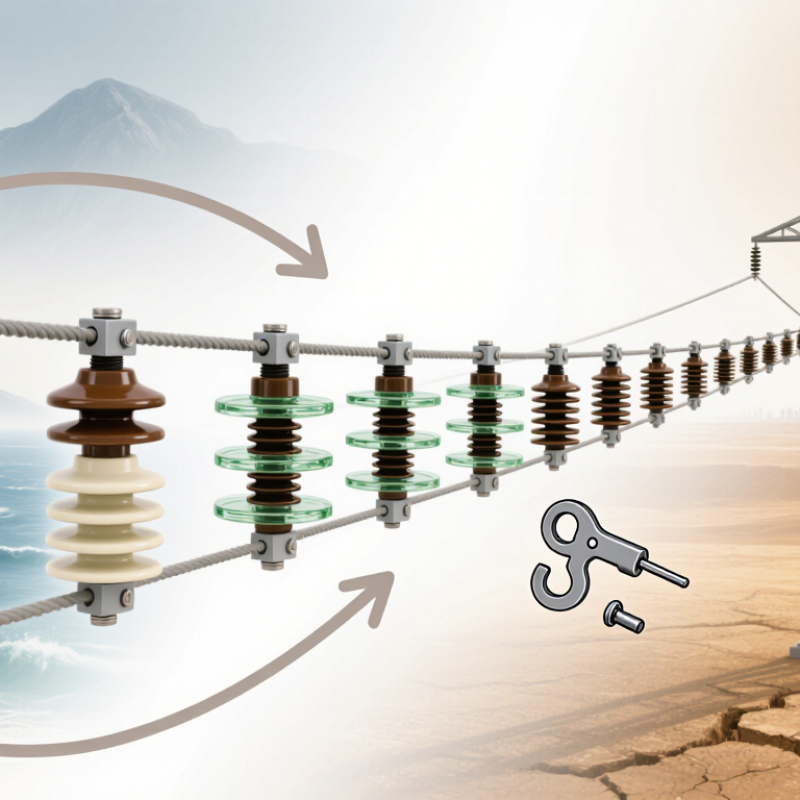
How to Choose the Right Disc Insulator for Your Project

Define the Project’s Voltage, Load, and Operating Conditions

Define the project’s voltage before selecting a disc insulator.

Use the system’s highest operating voltage, not only its nominal value, and account for temporary overvoltage where applicable. Insulation coordination and the required withstand level should guide the choice. Small details matter. A design based on a single voltage figure may look tidy, yet miss how the line actually operates.

Then assess mechanical load and site conditions together.

Check the expected conductor tension, dead load, wind, and vibration, including installation and maintenance conditions. Compare these demands with the insulator’s rated mechanical strength, and confirm the complete assembly’s load path. Do not guess. At the site, note pollution such as salt, dust, or industrial residue; it can affect the creepage distance needed for reliable performance. Also consider altitude, temperature swings, rain, and ice. A clean test environment does not reproduce every field condition. Review the applicable specifications and test data with a qualified engineer, and revisit assumptions when site measurements differ from early estimates.

Compare Disc Insulator Types and Materials

Disc strings are built from individual units, but material choice changes weight, handling, and maintenance. Porcelain offers a dense, familiar option with strong resistance to weathering, though each unit is relatively heavy and can be harder to inspect for internal damage. Toughened glass makes visible damage easier to spot: a shattered disc stands out during a ground or drone survey. Composite units use a lightweight polymer housing and fiberglass core, which can simplify installation on structures with tight lifting limits. Weight matters. IEC 60383-1:1993 covers ceramic and glass line insulators for systems above 1,000 V; IEC 61109:2008 sets requirements and tests for composite suspension and tension insulators above 1,000 V. These are useful selection references, not substitutes for project-specific design checks.

Compare the electrical and environmental details, not just the material. On a coastal route, salt deposits and fog can raise leakage-current risk, so creepage distance and pollution performance deserve close review. In a dusty inland area, cleaning access may matter more than unit weight. Check specified mechanical load, voltage, fitting compatibility, and test certificates against the design. Composite surfaces can resist pollution through hydrophobicity, but aging and surface damage still need inspection. Glass offers quick visual clues, while porcelain damage may be less obvious. There is no universal winner. I still verify actual site pollution and maintenance access before choosing; assumptions made from a map can be wrong.

How to Choose the Right Disc Insulator for Your Project - Compare Disc Insulator Types and Materials

Type Typical Construction Key Strengths Considerations Common Applications Best-Fit Project Conditions
Porcelain cap-and-pin disc Glazed electrical porcelain body joined to metal cap-and-pin fittings; units are connected into a suspension or tension string. Established design; good resistance to weathering and surface electrical stress when correctly selected and maintained. Relatively heavy. Mechanical damage or internal defects may not always be obvious from a visual inspection; contamination can require washing or other maintenance. Overhead transmission and distribution lines, including suspension and dead-end strings. Projects seeking a widely used cap-and-pin solution with established inspection and maintenance practices.
Toughened-glass cap-and-pin disc Toughened glass dielectric body with metal cap-and-pin fittings; designed to form strings of interchangeable units. A punctured or damaged glass body is often easier to identify visually because it may shatter; the glass surface is generally smooth and non-porous. The glass body can shatter following mechanical impact or electrical damage, so handling, transport, and site conditions matter. Overhead line suspension and tension strings where cap-and-pin units are specified. Projects that value visible identification of many damaged units and can manage glass handling and replacement.
Composite polymer suspension insulator Usually a long-rod design rather than a stack of individual discs: a fibre-reinforced polymer core with polymer sheds, commonly silicone rubber, and end fittings. Lightweight relative to many ceramic strings; hydrophobic silicone surfaces can help limit wetting and leakage current under suitable conditions. Performance depends on material quality, design, and exposure. UV, pollution, and aging effects require appropriate product qualification and inspection; damage to the core or sheath needs attention. Overhead line suspension and tension applications where a composite long-rod alternative is acceptable. Projects where reduced string weight or pollution performance is a priority and the utility has suitable composite-insulator inspection practices.

Selection note: Determine the required insulation level, creepage distance, mechanical strength, and string configuration from the system voltage, insulation coordination, pollution severity, altitude, site conditions, applicable standards, and utility specifications. The number of units in a disc string is project-specific; do not select it from voltage alone.

Check Electrical, Mechanical, and Environmental Ratings

How to Choose the Right Disc Insulator for Your Project

Check Electrical, Mechanical, and Environmental Ratings

Match the insulator’s rated voltage and impulse withstand level to the system’s maximum operating and surge conditions. For pollution exposure, IEC 60815-1 uses equivalent salt deposit density (ESDD) to assess site severity. Its reference bands run from below 0.03 mg/cm² for very light pollution to above 0.25 mg/cm² for very heavy pollution. These figures help narrow choices, but local salt, dust, and wetting patterns still matter. A coastal substation’s windward strings may need different creepage performance from sheltered equipment nearby.

Check the specified mechanical failing load against conductor tension, wind, ice, and installation loads. IEC 60383-1 provides test and acceptance criteria for ceramic and glass insulator units. Confirm the project’s load cases and connection dimensions, not just the product’s headline rating. Then assess temperature swings, ultraviolet exposure, altitude, and chemical deposits. Field measurements are imperfect. That uncertainty matters.

Verify Standards, Hardware, and Installation Compatibility

How to Choose the Right Disc Insulator for Your Project

Verify the electrical, mechanical, and installation details together.

Confirm system voltage, pollution severity, altitude, required creepage distance, and expected loading against the project specification. IEC 60305 covers ceramic or glass cap-and-pin units for overhead lines above 1 kV. IEC 61109 addresses composite suspension and tension insulators. Check the applicable editions and utility requirements. Standards are only a baseline. A datasheet rating alone cannot confirm that an insulator suits the site.

Check the fitting interface before ordering: cap-and-pin dimensions, ball-and-socket coupling, cotter keys, string length, and clearance for grading rings. IEC 60120 specifies ball-and-socket coupling dimensions for string insulator units. A small mismatch can complicate assembly or maintenance.

The IEA’s 2023 Electricity Grids report says more than 80 million kilometres of grids must be added or replaced by 2040, roughly the length of today’s global grid. That forecast is not an insulator specification, but it highlights the value of consistent fit and inspection. Compare drawings with actual hardware, then verify clearances and connection security during installation.

One detail is easy to miss: drawings may not show wear or dirt on existing fittings. Recheck them on site.

Balance Service Life, Maintenance, and Total Cost

Choosing a disc insulator by purchase price alone can make maintenance expensive later. Compare expected service life, inspection access, washing needs, and replacement labor. Site conditions matter. Salt, cement dust, and frequent fog can increase leakage current and flashover risk. IEC TS 60815-1:2008 classifies heavy pollution as an equivalent salt deposit density of 0.10–0.25 mg/cm². That measurement helps engineers match creepage distance to actual exposure, rather than relying on a generic catalog choice.

For each option, estimate the full cost across the planned project period: purchase, installation, inspections, cleaning, outages, and replacements. A cheaper glass or porcelain unit may suit a clean, accessible site. A difficult-to-reach coastal structure may justify a higher initial cost if it reduces washing visits or replacement work. Check the utility’s failure and maintenance records where available. They are more useful than a broad service-life claim. Still, records can be incomplete.

Compare condition checks as well as price. Look for chipped sheds, corrosion at fittings, contamination deposits, and signs of tracking during routine patrols. IEC pollution classes guide selection; they do not predict every local failure. Allow for uncertain access costs and changing pollution levels. A small contingency is sensible. Not glamorous, but practical. Revisit the estimate after the first inspection cycle, especially if deposits or cleaning frequency differ from the design assumptions.

FAQS

Which electrical ratings should I check?

Match rated voltage and impulse withstand level to the system’s maximum operating and surge conditions. Use project data, not guesswork.

How does pollution affect disc insulator selection?

Salt, dust, and wetting can increase leakage current and flashover risk. Windward equipment may need more creepage distance than sheltered equipment.

What does ESDD tell me?

Equivalent salt deposit density helps assess site pollution severity. Values below 0.03 mg/cm² indicate very light pollution; above 0.25 mg/cm² indicates very heavy pollution. Local deposits still vary.

How should I check mechanical strength?

Compare the specified failing load with conductor tension, wind, ice, and installation loads. Confirm connection dimensions too. A small margin helps.

Which environmental conditions should I consider?

Review temperature swings, ultraviolet exposure, altitude, and chemical deposits. Inspect the site after rain or fog. Deposits can collect unevenly.

What documents should I request?

Ask for test certificates and confirm their ratings match project conditions. Ceramic and glass units have relevant test and acceptance criteria in IEC 60383-1.

How can I compare total costs?

Include purchase, installation, inspections, cleaning, outages, and replacement labor. A harder-to-reach coastal structure may make fewer washing visits valuable.

What should routine inspections look for?

Check for chipped sheds, corroded fittings, contamination, and tracking signs. Utility maintenance records can help, but they may be incomplete. No estimate is perfect.

When should I revisit the selection estimate?

Review it after the first inspection cycle. Adjust assumptions if deposits or cleaning frequency differ from the plan. It may be worth rethinking.

Conclusion

Choosing the right Disc Insulator begins with a clear understanding of the project’s voltage requirements, mechanical loads, and operating environment. Consider factors such as temperature changes, moisture, pollution, and exposure to weather when comparing available insulator types and materials. These conditions influence performance and help narrow the options suited to the application.

Next, check that each candidate meets the required electrical, mechanical, and environmental ratings. Confirm that its standards, fittings, and installation method are compatible with the rest of the system. Finally, look beyond the initial purchase price: expected service life, inspection needs, maintenance effort, and replacement costs all contribute to the total cost of ownership. A careful comparison of these factors can help identify an insulator that provides dependable performance and practical long-term value.

Oliver

Oliver

Oliver is a seasoned marketing professional with a wealth of expertise in driving brand awareness and engagement. With a deep understanding of our company's product offerings, he consistently delivers high-quality content that enriches our professional blog. His insights not only shed light on......