
What Are the Top Suspension Type Insulators to Buy?

Time:2026-10-18 Author:Aria
0%

Choosing the best Suspension Type Insulators is not a simple matter of comparing prices or catalogue photographs. The right choice depends on voltage class, mechanical loading, pollution severity, climate, and the tower’s actual geometry. A unit that performs reliably on a dry inland line may fail earlier near salt spray, industrial dust, or frequent storms.

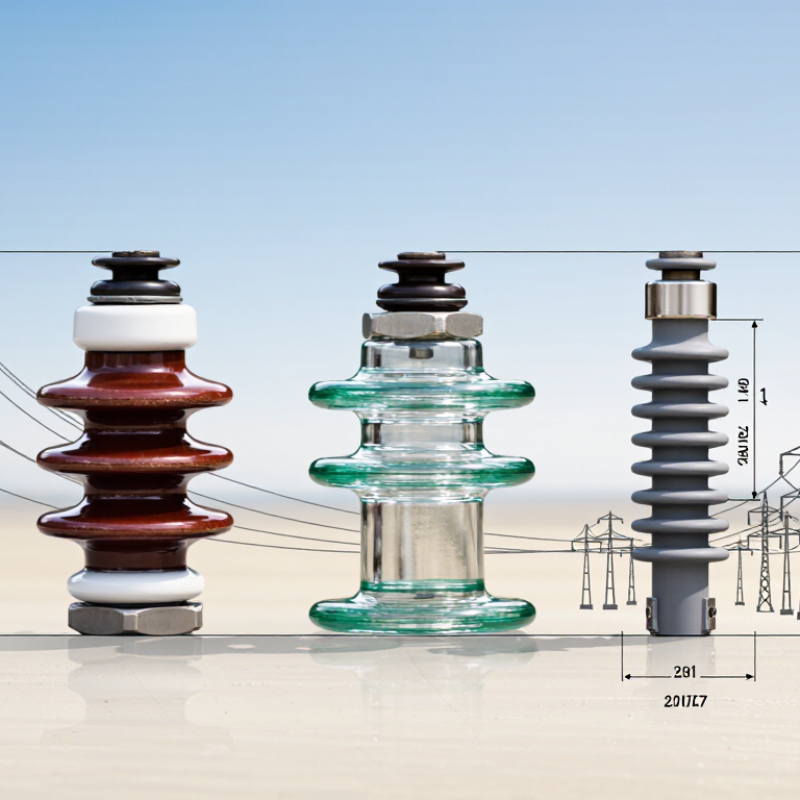
Dr. E. Kuffel, a respected high-voltage engineering authority, expressed a useful principle: “Insulation coordination must begin with the system, not the component.” That guidance remains important when evaluating porcelain, toughened glass, and composite Suspension Type Insulators. Each material offers different strengths. Porcelain provides long service experience and visible damage. Glass can reveal punctures clearly. Composite designs reduce weight and often resist contamination effectively, but their ageing behaviour deserves careful inspection.

Look beyond the brand name.

A dependable buying decision should examine creepage distance, rated tensile strength, coupling hardware, corona performance, and compliance with relevant IEC or national standards. Field experience also matters. Check whether maintenance crews can handle the units safely, whether spare parts are available, and whether inspection records are easy to interpret.

There is no universal winner. My initial preference may change after reviewing local weather data, conductor tension, and utility maintenance history. That uncertainty is not a weakness; it is part of responsible engineering. The following guide compares leading Suspension Type Insulators through practical performance, verified specifications, installation conditions, and long-term value. Small details, such as chipped skirts or loose fittings, can decide a large investment.
What Are the Top Suspension Type Insulators to Buy?

Suspension Insulator Basics: Disc, Composite, and Long-Rod Designs

What Are the Top Suspension Type Insulators to Buy?

Suspension insulators support overhead conductors while controlling electrical stress. The right design depends on voltage, pollution, wind, and mechanical loading. Disc insulators remain widely used because units can be added for higher voltages. Porcelain offers strong compression performance, while glass makes surface damage easier to notice. However, disc strings require careful hardware alignment and regular inspection.

Composite insulators use a fiberglass core and a weather-resistant polymer housing. They are lighter than traditional disc strings and perform well in polluted or coastal areas. Their flexible surface can resist contamination, but aging and interface damage may be harder to detect. Long-rod insulators provide a continuous structure with fewer metal connections. They suit compact designs and can offer strong creepage performance. Still, transport and handling need attention. A small crack or poorly sealed end fitting can create serious service problems.

Tips: Match the insulator’s creepage distance to local pollution levels. Check rated tensile strength, not only voltage class. Inspect fittings, seals, and corrosion protection before purchase. Ask for test records covering mechanical, electrical, and environmental performance. Field conditions can differ from laboratory results. That matters. A clean catalog specification may not reflect dust, salt, ice, or sudden wind at the installation site. When comparing disc, composite, and long-rod designs, include maintenance access and replacement time in the buying decision.

Voltage Selection: From 11 kV Distribution to 1,000 kV UHV Lines

What Are the Top Suspension Type Insulators to Buy?

Voltage selection should match the line’s real operating conditions, not only its rated voltage.

For 11 kV distribution lines, compact suspension strings can suit dead-end, corner, or unusually high-load structures. However, pin or post designs may be more practical on straight routes. At 33 kV and 66 kV, longer strings and greater creepage distance become important, especially in coastal or industrial areas.

For 110 kV to 220 kV systems, suspension insulators commonly use porcelain, toughened glass, or composite materials. Selection should include wet withstand voltage, lightning impulse performance, mechanical strength, and altitude correction. At 500 kV and 1,000 kV UHV levels, the assembly becomes more demanding. Designers may use long strings, multiple strings, grading rings, corona-control fittings, and carefully tested hardware. A neat voltage label can mislead. I would not choose by voltage alone.

Tips:

Check the pollution level first. Salt, dust, and chemical deposits can trigger surface flashover. Compare creepage distance, not just string length. Confirm tensile ratings against conductor weight, wind, ice, and installation tension. Review independent test reports against applicable standards, such as IEC 60383, and request site-specific calculations. Composite insulators reduce weight and resist breakage, but their seals and core condition require careful inspection. Glass and porcelain provide visible damage clues, yet they can be heavier. Field experience matters here. A small installation assumption can become an expensive weakness.

Performance Metrics: Tensile Strength, Creepage Distance, and BIL

Choosing a top suspension type insulator starts with three numbers: tensile strength, creepage distance, and BIL. Each number describes a different failure risk. In field inspections, a cracked shell, salt deposits, or loose hardware can matter more than a polished catalog rating. Porcelain and glass units offer proven mechanical stability and visible damage detection. Composite units usually reduce weight and perform well in polluted areas. Material choice still depends on voltage, climate, installation height, and maintenance access.

Tensile strength shows how much mechanical load the insulator assembly can carry. Check the specified rated mechanical load, not only the breaking load. Do not confuse tensile strength with bending strength. Wind, conductor weight, ice, and short-circuit forces may act together. Load calculations should include fittings, conductor movement, and aging effects. Real hardware rarely sees one clean laboratory force.

Creepage distance controls surface leakage across the insulator. Salt, dust, and moisture can create a conductive film. On a coastal line, a longer creepage path may reduce flashover risk. Longer creepage is not automatically better, because added length can increase weight and cost. BIL indicates the lightning impulse withstand level, normally stated in kilovolts. It should match the system voltage, grounding method, and surge protection design. Testing should follow applicable IEC or IEEE procedures. One caution remains: clean tables can hide uncertain site conditions. Leave engineering margin where pollution or weather data is incomplete.

Material Comparison: Porcelain, Toughened Glass, and Silicone Rubber

What Are the Top Suspension Type Insulators to Buy?

Material choice should follow the line environment, not only the purchase price. Porcelain offers stable electrical performance and strong resistance to ultraviolet exposure. Its rigid body, however, can crack under impact or sudden temperature changes. Toughened glass shows visible damage after failure, because the disc usually shatters completely. That feature helps maintenance teams identify defective units from the ground. Silicone rubber composite insulators are lighter and resist surface pollution through hydrophobicity. Their polymer housings can age faster under severe ultraviolet radiation, heat, or poor manufacturing control.

The International Energy Agency reported in Electricity Grids and Secure Energy Transitions that 80 million kilometres of grids may require construction or refurbishment by 2040. That scale makes transport weight and installation time practical concerns. EPRI’s Transmission Line Reference Book also stresses coordinated mechanical, electrical, and environmental ratings during string selection. IEC 60815-1 requires pollution severity assessment before specifying creepage distance. In coastal or industrial areas, silicone rubber often deserves closer evaluation. In clean, stable climates, porcelain remains a dependable choice. Toughened glass is attractive where inspection access is limited.

I would not call one material universally superior. That claim ignores altitude, salt, vandalism risk, fittings, and washing practices. Field inspections still matter. A technically correct catalogue choice can fail when local pollution data is incomplete. Procurement teams should compare tested aging results, seal quality, shed design, and whole-life handling costs.

What Are the Top Suspension Type Insulators to Buy? — Material Comparison: Porcelain, Toughened Glass, and Silicone Rubber
Evaluation Dimension Porcelain Toughened Glass Silicone Rubber
Basic Construction Wet-process electrical porcelain cemented to metal fittings and designed as a cap-and-pin or similar suspension unit. Toughened soda-lime-silica glass disc with metal cap-and-pin fittings. Silicone rubber weather sheds molded over a fiberglass-reinforced polymer core with metal end fittings.
Typical Application Transmission and distribution lines, including locations requiring long-established mechanical and electrical designs. Transmission and distribution lines where visual inspection and stable dielectric performance are important. Polluted, coastal, industrial, compact, or lightweight line designs where hydrophobicity and low mass are valuable.
Relative Weight High
Generally heavier than an equivalent glass or composite unit.
Medium
Usually lighter than porcelain but heavier than silicone-rubber composite designs.
Low
Often substantially lighter than ceramic or glass alternatives for comparable insulation duties.
Mechanical Strength High compressive strength and well-established tensile and electromechanical ratings. High tensile and electromechanical strength; the tempered body is designed to withstand thermal and mechanical stress. High specific mechanical strength because of the fiberglass-reinforced core; fittings and sealing quality are critical.
Failure Indication Cracks, punctures, or internal defects may not always be obvious during a routine visual inspection. Typically provides a clear visual indication because a failed tempered glass shell shatters into small pieces while the fittings remain attached. Damage may involve a hidden core, interface, or fitting; detailed inspection and appropriate diagnostic methods may be required.
Surface Performance in Pollution Reliable when correctly dimensioned, but contamination can form a conductive wet layer and increase leakage current. Similar contamination behavior to porcelain; surface profile, creepage distance, and washing or maintenance may be important. Hydrophobic silicone surfaces usually reduce water-film formation and can provide strong pollution performance, subject to aging and contamination severity.
Creepage Distance Design Requires adequate creepage length and suitable shed geometry for the site pollution level. Requires adequate creepage length and suitable shed geometry for the site pollution level. May achieve the required pollution performance with optimized shed profiles and high creepage-to-length ratios.
Resistance to Vandalism Generally better than glass against localized impact, although severe impact can cause cracking or puncture. More vulnerable to direct projectile impact; breakage is usually readily visible. Flexible sheds can tolerate some impacts, but cutting, burning, or deliberate damage can compromise the insulation system.
Resistance to UV and Weathering Very good resistance to ultraviolet radiation and normal outdoor weathering when properly manufactured and glazed. Very good resistance to ultraviolet radiation and weathering; the glass body itself does not normally degrade under sunlight. High-quality electrical-grade silicone rubber offers strong UV and weathering resistance, but long-term performance depends on formulation, design, and installation quality.
Thermal Shock Resistance Good, although rapid temperature changes and manufacturing defects can contribute to cracking. Very good because the glass body is thermally toughened. Very good flexibility and thermal cycling capability; metallic fittings and interfaces still require careful design.
Maintenance Considerations Routine visual inspection, hardware checks, and pollution-related washing where required. Visual inspection is straightforward because shattered units are easy to identify; hardware and contamination checks remain necessary. Inspect for erosion, chalking, tracking, cuts, loss of shed profile, core exposure, and fitting or seal deterioration.
Installation and Handling Requires careful handling because units are heavy and brittle; suitable lifting practices are important. Requires protection from impact and improper handling before and during installation. Lightweight and easier to transport and install, but sheds and end seals should be protected from sharp tools and excessive bending.
Typical Service Life Commonly designed for several decades of outdoor service, subject to manufacturing quality, mechanical loading, and environmental conditions. Commonly designed for several decades of outdoor service, subject to impact, corrosion, pollution, and mechanical loading. Often designed for several decades of service, but actual life depends strongly on silicone formulation, core protection, interface sealing, and environmental exposure.
Standards Commonly Referenced IEC 60383-1 and IEC 60120 are commonly referenced for suspension and string insulator units and fittings; applicable national standards may also apply. IEC 60383-1 and IEC 60120 are commonly referenced for suspension and string insulator units and fittings; applicable national standards may also apply. IEC 61109 is commonly referenced for composite suspension and tension insulators for overhead lines; applicable national standards may also apply.
Main Advantages Long field history, high rigidity, strong compressive performance, and broad availability of proven designs. Clear failure visibility, strong thermal-shock resistance, stable surface properties, and long field history. Low weight, excellent hydrophobicity, good pollution performance, and suitability for compact or difficult-to-access lines.
Main Limitations High weight, brittleness, and possible difficulty in identifying some internal damage during visual inspection. Potential vulnerability to impact and vandalism; broken glass units require prompt replacement. Performance is more dependent on polymer formulation, manufacturing quality, interface protection, and inspection practices.
Best Selection Scenario Projects prioritizing established ceramic technology, rigidity, and proven long-term utility practice. Projects prioritizing visible failure detection, thermal-shock resistance, and established glass technology. Projects prioritizing low structural load, compact design, and improved performance in pollution or coastal environments.
Note: Performance varies with rated voltage, insulation coordination, creepage distance, line configuration, mechanical loading, pollution severity, climate, hardware design, and applicable standards. Final selection should be based on type-test data and the project’s environmental and electrical requirements.

Buying Standards: IEC 60383, IEC 60815, ANSI C29.2, and Lifecycle Cost

What Are the Top Suspension Type Insulators to Buy?

The best suspension insulator depends on voltage, pollution, climate, and maintenance access. Porcelain and toughened glass units remain practical choices for many overhead lines. IEC 60383 defines key requirements, tests, and dimensions for ceramic and glass insulators above 1,000 volts. Check the exact edition and product category before comparing quotations. A cheaper unit may fail your project specification.

Pollution deserves close attention. IEC 60815 guides the selection and dimensioning of insulators in contaminated environments. It considers pollution severity, creepage distance, site exposure, and leakage behavior. Coastal salt, industrial dust, and desert sand create different risks. Longer creepage is not always the complete answer. Shape, material, washing access, and installation height also matter. Field conditions are rarely as clean as design reports suggest.

ANSI C29.2 provides requirements for suspension-type porcelain and glass insulators in systems using inch-based classifications. Projects following North American practices should confirm mechanical strength, electrical ratings, testing, and interchangeability. Composite alternatives may follow different standards, so applying IEC 60383 automatically would be a mistake. Compare lifecycle cost, not only purchase price. Include transport, hardware, installation, inspection, washing, outage exposure, and replacement labor. A unit costing less today can create higher costs during storms or contamination events. No checklist is perfect; site data may be incomplete. Independent testing, traceable certificates, and a documented maintenance plan improve buying confidence.

What Are the Top Suspension Type Insulators to Buy?

IEC 60815-1 uses minimum specific creepage distances of 16, 20, 25, and 31 mm/kV for light, medium, heavy, and very heavy pollution conditions. IEC 60383 covers ceramic and glass insulator units for overhead lines above 1,000 V, while ANSI C29.2 covers porcelain and glass suspension insulators. For lifecycle cost, compare purchase, installation, inspection, washing, replacement, and outage exposure rather than purchase price alone.

FAQS

What should determine the choice of a suspension insulator?

Consider voltage, pollution, wind, ice, altitude, and mechanical loading. Maintenance access matters too. Site conditions decide.

Why are disc insulators still widely used?

Disc units can be added to increase voltage capability. They offer flexible string design and practical replacement. Alignment remains important.

When are composite insulators a suitable option?

Composite insulators are lightweight and useful in polluted or coastal areas. Their weather-resistant housing can reduce contamination problems. Aging may be harder to detect.

What are the main benefits of long-rod insulators?

Long-rod designs use fewer metal connections. They support compact layouts and strong creepage performance. Transport needs care.

How do porcelain, glass, and silicone rubber compare?

Porcelain provides stable electrical performance and strong ultraviolet resistance. Toughened glass shows visible failure. Silicone rubber is light and resists surface pollution.

How should pollution affect insulator selection?

Match creepage distance to local pollution severity. Coastal salt, industrial dust, and desert sand behave differently. Longer creepage alone may not solve every problem.

What should buyers inspect before placing an order?

Check tensile strength, fittings, seals, corrosion protection, and shed design. Request mechanical, electrical, and environmental test records. Certificates should be traceable.

How can buyers compare the real cost of different designs?

Include transport, installation, inspections, washing, replacement labor, and outage exposure. A cheaper purchase can create larger storm-related costs. Price is not everything.

Which design is best for every overhead line?

None is universally best. Local pollution data, climate, handling limits, and maintenance practices change the answer. I would avoid easy claims.

Why can laboratory results differ from field performance?

Real sites contain dust, salt, ice, sudden wind, and temperature changes. Installation quality also matters. The catalog may look perfect. Reality is less tidy.

Conclusion

Suspension Type Insulators are essential components in overhead transmission and distribution systems, providing reliable electrical insulation and mechanical support for conductors. This overview explains the main designs, including disc, composite, and long-rod insulators, and shows how selection changes from 11 kV distribution networks to UHV lines reaching 1,000 kV. Key performance factors include tensile strength, creepage distance, insulation coordination, and basic insulation level (BIL), all of which influence safety and service reliability under electrical, mechanical, and environmental stress.

The article also compares porcelain, toughened glass, and silicone rubber, highlighting their different strengths in durability, contamination performance, maintenance, and weight. For purchasing decisions, buyers should evaluate applicable standards such as IEC 60383, IEC 60815, and ANSI C29.2, while also considering testing, installation requirements, expected service life, and total lifecycle cost. A balanced assessment of technical performance and long-term value helps ensure the selected insulators match the system voltage and operating environment.

Aria

Aria

Aria is a dedicated marketing professional with a deep passion for innovative strategies and a keen understanding of our company's product offerings. With a wealth of experience in the industry, Aria excels at crafting engaging content that highlights the unique features and benefits of our......