
China’s tempered-glass market is best understood through its products and production scale. The National Bureau of Statistics of China reported 969.4 million weight cases of flat-glass output in 2023. That figure covers flat glass, not tempered glass alone, but it shows the size of China’s upstream supply base. For buyers, the key question is how each product performs in its intended application.
This guide compares clear, tinted, patterned, coated, laminated-tempered, and heat-soaked options. It draws on ASTM C1048, which distinguishes fully tempered glass from heat-strengthened glass, and on technical guidance from the National Glass Association. Glass scientist John C. Mauro’s published research offers useful context on how composition and processing shape glass performance. I could not verify a direct quotation from him about Chinese tempered-glass types, so I will not invent one.
Details matter. A clear panel beside a shower, a tinted façade panel under strong sunlight, and a laminated unit above a busy entrance face different demands. Tempering can improve strength and alter breakage behavior, but it does not make every pane suitable for every setting. Small differences in thickness, edge quality, coatings, and fabrication can affect the finished result. Labels alone are not enough.
The comparison ahead focuses on those practical distinctions, along with common uses and selection points. It is a starting guide, not a substitute for project-specific technical review. Choose for the application. Check the specification.
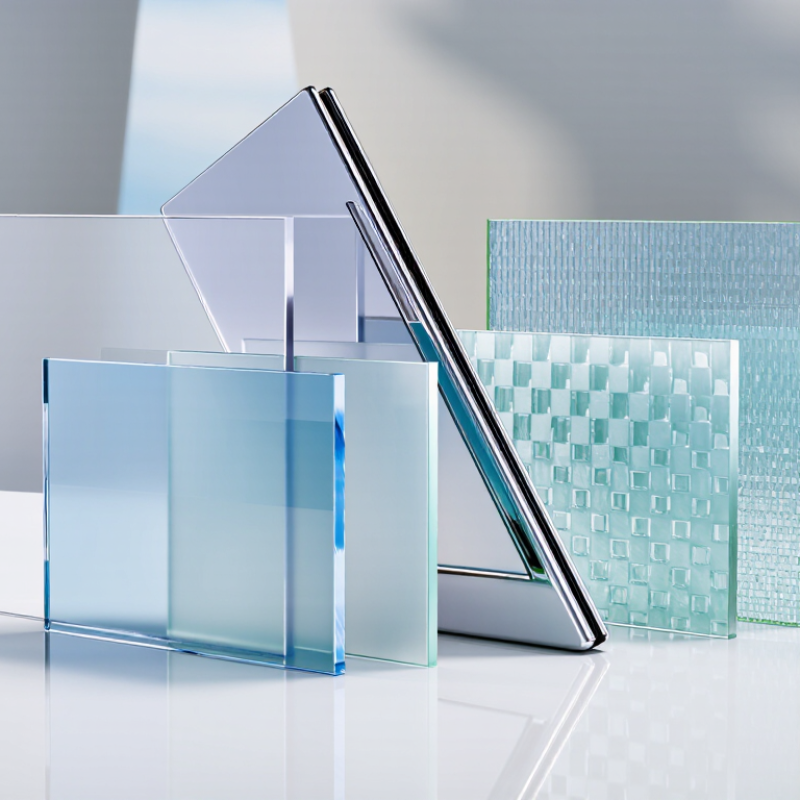
In China, tempered glass is classified by more than appearance. Suppliers commonly describe it by processing method, shape, and intended use. Flat tempered glass is heat-treated as a flat pane, while curved tempered glass is formed before cooling. Both undergo rapid cooling that creates surface compression. Their performance still depends on thickness, edge quality, and processing control. Small edge defects matter.
Appearance categories include clear, low-iron, tinted, patterned, and coated glass. These describe the glass’s look or surface, not necessarily its safety classification. A second distinction concerns construction: laminated and insulating units may contain tempered panes, but they are assemblies, not separate tempering methods. Heat-strengthened glass is also different; it receives less intense treatment and should not be casually labeled tempered. This distinction is easy to miss on a quote sheet.
For procurement, compare the stated glass type with its intended location, dimensions, and applicable Chinese safety-glazing requirements. Ask for test documentation and confirm whether the description refers to one pane or a complete unit. Labels can be inconsistent. Check the details.
Clear and ultra-clear tempered glass suit everyday spaces where daylight, clean sightlines, and safety matter. Typical industry technical data sheets report visible-light transmission near 89% for 4 mm clear float glass and about 91% for comparable low-iron glass. These are reference figures, not guarantees; thickness, tint, coatings, and measurement methods change results. A few percentage points can make a white kitchen feel brighter, though reflections and room orientation still matter.
Tempering improves resistance to impact and thermal stress, but it does not make glass unbreakable. China’s GB 15763.2 safety-glass standard includes fragmentation testing, an important distinction from simply calling a pane “tough.” For a shower screen, cabinet door, or interior partition, confirm the glass is marked as tempered and ask for its test documentation. Check the edges, too. Chips can become weak points. Ultra-clear glass can show fingerprints and water spots more plainly, while ordinary clear glass may carry a faint green tint at exposed edges. I’d compare physical samples in the actual room; photographs rarely reveal that difference well.
Tinted tempered glass can soften harsh daylight while reducing solar heat entering a room. The U.S. Department of Energy estimates that windows account for about 25–30% of residential heating and cooling energy use. That figure is not a guarantee for every building; climate, window area, and orientation all matter. A gray or bronze tint may help with glare on a west-facing desk, but it also reduces daylight. Check visible transmittance and solar heat gain coefficient (SHGC) ratings, rather than judging tint by color alone. The National Fenestration Rating Council uses these metrics to compare window performance.
There are trade-offs. Darker glass can make indoor spaces feel dim, while absorbed solar heat may increase thermal stress if glass size, edge conditions, or framing are poorly matched. Tempering improves resistance to impact and thermal stress, but does not make a panel unbreakable. Ask for tested performance data for the complete glazing assembly, not just a sample pane. For a sunlit storefront, compare glare, daylight, and cooling needs at the actual installation angle. One detail is easy to overlook: neighboring buildings and seasonal sun paths can change the result, so a tint that works in one room may disappoint in another.
Sunlight reaching the ground contains ultraviolet, visible, and infrared energy. These approximate shares provide context for how tinted glass can manage daylight and solar heat; they are not transmission ratings for a particular glass product. Actual performance varies with tint, thickness, and construction. Compare product-specific visible light transmittance (VLT) and solar heat gain coefficient (SHGC) when selecting glass.
Coated tempered glass combines heat-treated strength with a surface layer that manages sunlight. Low-emissivity coatings can reduce heat transfer, while solar-control coatings limit some incoming solar energy. The right choice depends on the building’s climate, window orientation, and desired daylight. Details matter.
On a sunny west-facing window, for example, solar control may reduce afternoon glare and indoor heat buildup. Low-E glass can help maintain more stable indoor temperatures during colder periods. Performance varies by coating, glass thickness, and the full window assembly, so check tested values such as U-factor and solar heat gain coefficient. A sample viewed indoors may appear different beside a bright exterior. Not always obvious.
Ask whether the coating is designed to withstand tempering and which surface should face outward or inward. Incorrect handling or placement can affect appearance and performance.
Compare visible light transmission with solar protection; darker glass is not automatically more efficient. I would also review the supplier’s test documentation and inspect a full-size sample, since small samples can hide color shifts and reflections. Coated glass can improve comfort, but it cannot fix poor shading or unsuitable window design on its own.
Patterned tempered glass combines safety with texture. Its raised or embossed surface softens direct views while spreading daylight across a room. Common designs range from fine linear ribs to small geometric repeats. These patterns suit shower screens, partitions, doors, and interior panels. The texture is formed before tempering, so edges and dimensions must be planned before heat treatment. A practical detail: fingerprints and cleaning marks can show differently on textured surfaces.
Ceramic-frit tempered glass uses ceramic paint applied to the glass and fused during heating. The finish can appear as dots, bands, borders, or broad colored areas. Designers use it to create privacy, reduce glare, or add a clear visual boundary around doors and façades. Small frit dots may preserve more daylight than a solid coating. Not always. Dense coverage can change the glass’s heat absorption, so the finished design needs technical review for its location and size.
For both types, request a physical sample and check it in the intended lighting. A screen image rarely shows texture, color, or reflection accurately. Confirm the panel dimensions, edge finish, holes, and cutouts before production; tempered glass cannot be cut afterward. Ask for product test records and clear inspection criteria. One caution: a sample may not reveal every variation across a full production batch. Plan for that possibility.
| Glass type | How the decorative effect is made | Appearance and light control | Common nominal thicknesses | Typical decorative applications | Selection considerations |
|---|---|---|---|---|---|
| Patterned tempered glass | A surface pattern is formed in the glass during manufacture. The glass is cut and finished to size before being heat-treated for tempering. | Textured surfaces diffuse light and partially obscure views. The amount of privacy and light diffusion depends on the pattern, glass thickness, and viewing conditions. | Common options include 4, 5, 6, 8, and 10 mm; availability depends on the pattern and manufacturer. | Interior doors, partitions, shower enclosures, cabinet fronts, and decorative screens. | Check pattern direction, texture depth, cleaning requirements, and whether the selected design is available in the required dimensions. |
| Ceramic-frit tempered glass | Ceramic enamel is applied to the glass surface by a printing process and fused to the glass during heat treatment. The glass is tempered as part of this production process. | Can create solid or patterned areas in a range of colors. Printed areas reduce direct visibility and light transmission; the effect depends on frit coverage and design. | Common options include 4, 5, 6, 8, 10, and 12 mm; specifications vary by supplier and project. | Building façades, spandrel areas, partitions, doors, balustrade infill, and decorative wall panels. | Confirm color, coverage, print orientation, edge treatment, and the intended viewing side. Color appearance may vary with lighting and the glass substrate. |
| Patterned glass with ceramic-frit details | A surface texture is combined with printed ceramic-enamel elements. The pattern and printed layout must be coordinated before the glass is tempered. | Combines diffused views from the texture with defined colored or opaque motifs from the frit. | Thickness and maximum panel size are determined by the selected pattern, frit design, and fabricator’s production capability. | Feature partitions, entrance screens, decorative doors, and custom interior glazing. | Request a sample or full-scale layout to review how texture, print placement, and edge clearances work together. |
Thicknesses shown are common nominal options, not guaranteed specifications. Confirm dimensions, processing limits, applicable safety requirements, and performance with the glass supplier for each project.
Suppliers describe it by processing method, shape, appearance, and intended use. Flat and curved glass differ in forming steps. Appearance may be clear, tinted, patterned, or coated. These labels do not always define safety performance.
Tempered glass receives rapid cooling that creates surface compression. Heat-strengthened glass receives less intense treatment. They are not interchangeable terms. Check the product description and test records.
No. They are assemblies that may contain tempered panes. Ask whether a quote describes one pane or the complete unit. This detail is easy to overlook.
Match the coating to climate, window direction, and daylight needs. Solar-control coatings can limit some incoming solar energy. Low-emissivity coatings can reduce heat transfer. Details matter.
No. Darker glass is not automatically more efficient. Compare visible light transmission, U-factor, and solar heat gain coefficient. A small sample may hide color shifts.
Its textured surface softens direct views while spreading daylight. It can suit shower screens, partitions, doors, and interior panels. Fingerprints may show differently on raised patterns.
Ceramic paint can form dots, borders, bands, or broad colored areas. These designs can add privacy or mark a glass boundary. Dense coverage may affect heat absorption. Check the intended location.
Confirm dimensions, edge finishes, holes, and cutouts before tempering. Tempered glass cannot be cut afterward. Request test documentation and inspect a full-size sample. I would still allow for batch variation.
China offers several tempered glass options, each designed for different practical and visual needs. A Tempered Glass Type is generally classified by its appearance, surface treatment, and intended performance. Clear and ultra-clear varieties are common choices for everyday applications, providing transparency while allowing natural light to pass through. Tinted glass adds color and can help manage brightness and solar heat, making it useful where light and comfort need to be balanced.
Coated tempered glass supports energy efficiency by helping control heat transfer and reduce the effects of solar exposure. For projects that place greater emphasis on appearance, patterned glass creates texture and visual privacy, while ceramic-frit glass can add decorative designs and distinctive surface details. Together, these types give designers and buyers a range of ways to balance clarity, light control, energy performance, privacy, and style. The best choice depends on the setting and the qualities most important to the project.
