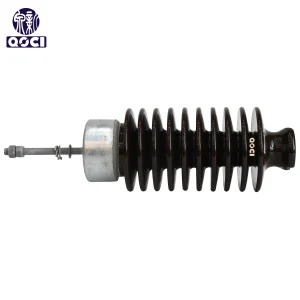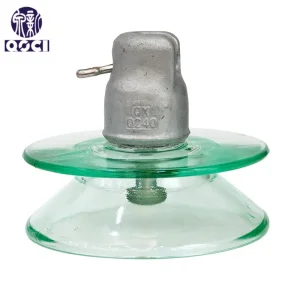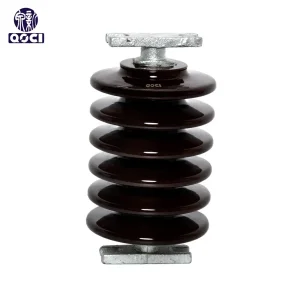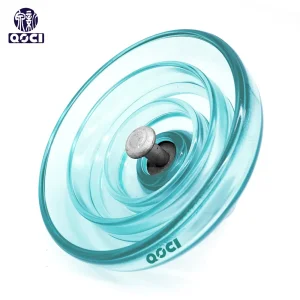
Explore our core OEM/ODM ANSI standard and IEC compliant insulator lines engineered for ultra-low puncture rates and maximum tensile strength.
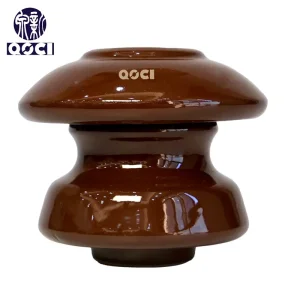
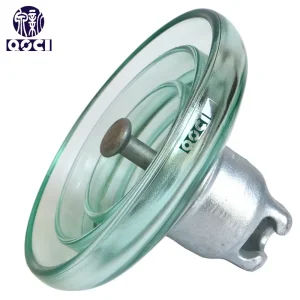
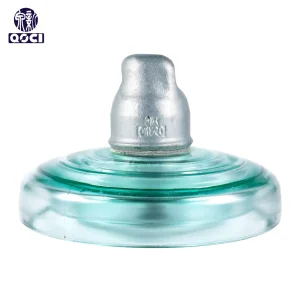
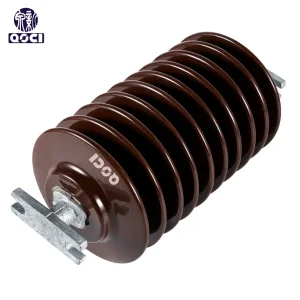
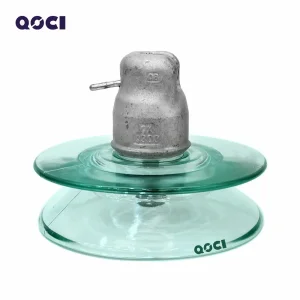
In-depth analysis of Mechanical & Electrical (M&E) rating standards, dielectric performance under transient surges, and physical geometry compliance per ANSI C29.2.
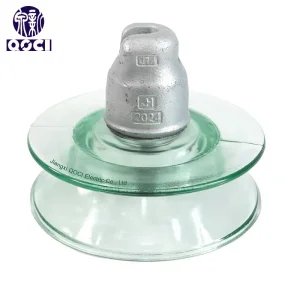
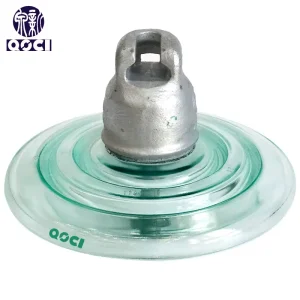
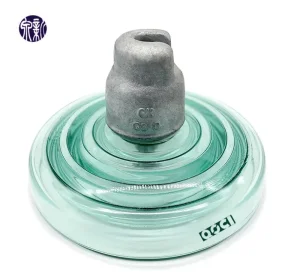
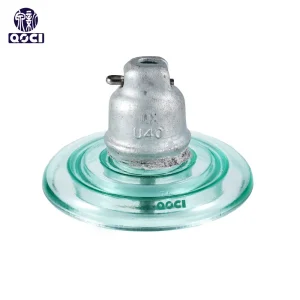
The ANSI Class 52-5 Disc Suspension Insulator is a fundamental mechanical and electrical isolation unit specified under the American National Standard for Insulators - Wet-Process Porcelain and Toughened Glass Types (Suspension Type) ANSI C29.2. Rated for a combined Mechanical and Electrical (M&E) strength of 15,000 lbs (66 kN / 70 kN rating equivalent), the ANSI 52-5 insulator serves as the benchmark for overhead power transmission and distribution lines operating across 69kV, 115kV, 230kV, and ultra-high voltage (UHV) grid configurations globally.
Featuring a standard disc diameter of 10 inches (254 mm) and a structural spacing height of 5-3/4 inches (146 mm), ANSI 52-5 string insulators are meticulously designed to handle cyclic mechanical tension loads, wind-induced galloping, thermal shock, and extreme atmospheric overvoltages. Modern power grids increasingly demand toughened glass variants due to their non-aging dielectric properties, zero internal puncture failure rates, and immediate visual diagnostics provided by spontaneous shattering upon mechanical shell destruction.
Unlike porcelain insulators which suffer from invisible internal micro-cracking and hidden dielectric puncturing (requiring laborious live-line megohmmeter testing), toughened glass ANSI 52-5 insulators feature residual mechanical strength exceeding 80% even when the glass disc is completely shattered. If a high-energy arc or vandalism damages the glass shell, it disintegrates into small blunt fragments without dropping the line, rendering fault location effortless for line inspection drones and helicopters.
| Technical Characteristic | ANSI C29.2 Standard Value | QOCI Manufacturing Value | Testing Protocol / Compliance |
|---|---|---|---|
| Combined Mechanical & Electrical Strength | 15,000 lbs (66.7 kN) | 70 kN (15,736 lbs) | ANSI C29.2 / IEC 60383 |
| Nominal Disc Diameter (D) | 10 inches (254 mm) | 254 mm ± 5 mm | Dimensional Inspection |
| Structural Unit Spacing (H) | 5-3/4 inches (146 mm) | 146 mm | Dimensional Inspection |
| Minimum Nominal Creepage Distance | 7.5 to 11 inches (190-280 mm) | 320 mm (Standard) / 450 mm (Anti-Fog) | IEC 60815 Atmospheric Standard |
| Low-Frequency Dry Flashover Voltage | 80 kV | 85 kV | ANSI C29.1 Section 4.2 |
| Low-Frequency Wet Flashover Voltage | 50 kV | 55 kV | ANSI C29.1 Section 4.3 |
| Critical Impulse Flashover (Positive) | 125 kV | 135 kV | 1.2/50 µs Waveform Surge Test |
| Critical Impulse Flashover (Negative) | 130 kV | 140 kV | 1.2/50 µs Waveform Surge Test |
| Low-Frequency Puncture Voltage | 110 kV | Inviolable (Glass Dielectric) | Immersion Puncture Test |
| Zinc Coating Mass (Hardware) | ASTM A153 Class B | ≥ 610 g/m² (Hot-Dip Galvanized) | ASTM A90 / ISO 1461 |
Understanding the transition toward high-reliability transmission corridors, renewable integration, and zero-maintenance power infrastructure.
Global investments in offshore wind, solar farms, and regional grid interconnections require transmission lines capable of operating at maximum capacity under extreme load shifts. High-tensile ANSI 52-5 insulators ensure structural stability under elevated thermal expansion of conductors.
Utilities are upgrading specifications from standard profile glass to anti-pollution, double-shed, and RTV silicone-coated insulators to combat industrial smog, ocean salt fog, and heavy snow accumulation that cause devastating pollution flashovers.
Procurement departments of major utilities (TNOs/DNOs) in North America, South America, and Europe are phasing out legacy porcelain due to high lifecycle maintenance costs. Toughened glass offers zero-puncture reliability and eliminates micro-crack aging.
Precision-engineered glass profiles tailored for coastal salt fog, desert sandstorms, extreme freezing, and heavy industrial contamination zones.
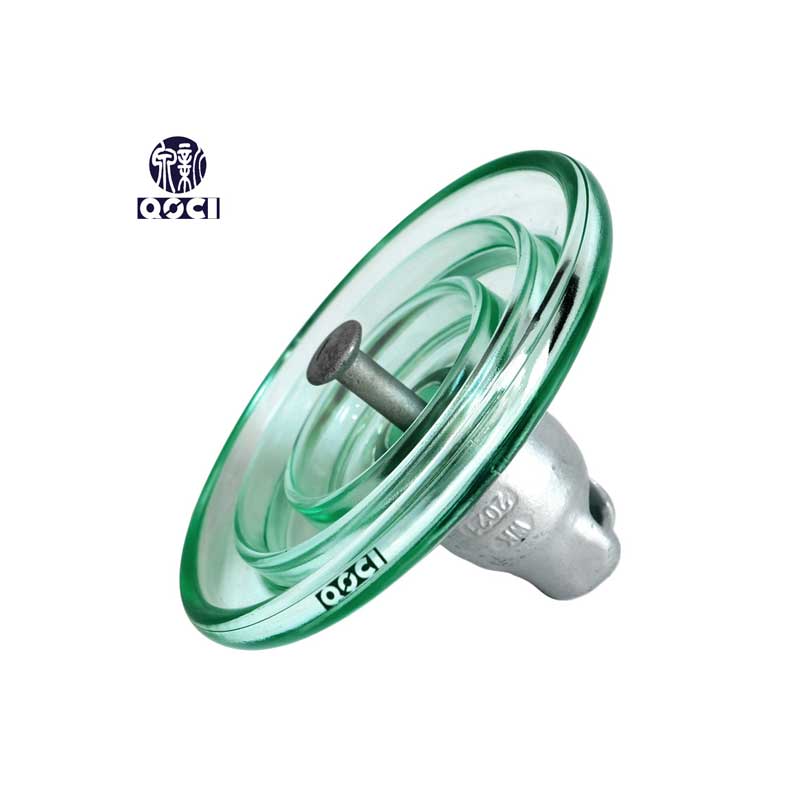
The characteristic of the standard profile is that the leakage distance is higher than the value indicated for standard insulators in IEC 60305. The insulation part is designed with shallow and well spaced small ribs, which can be effectively self-cleaning by wind or rain.
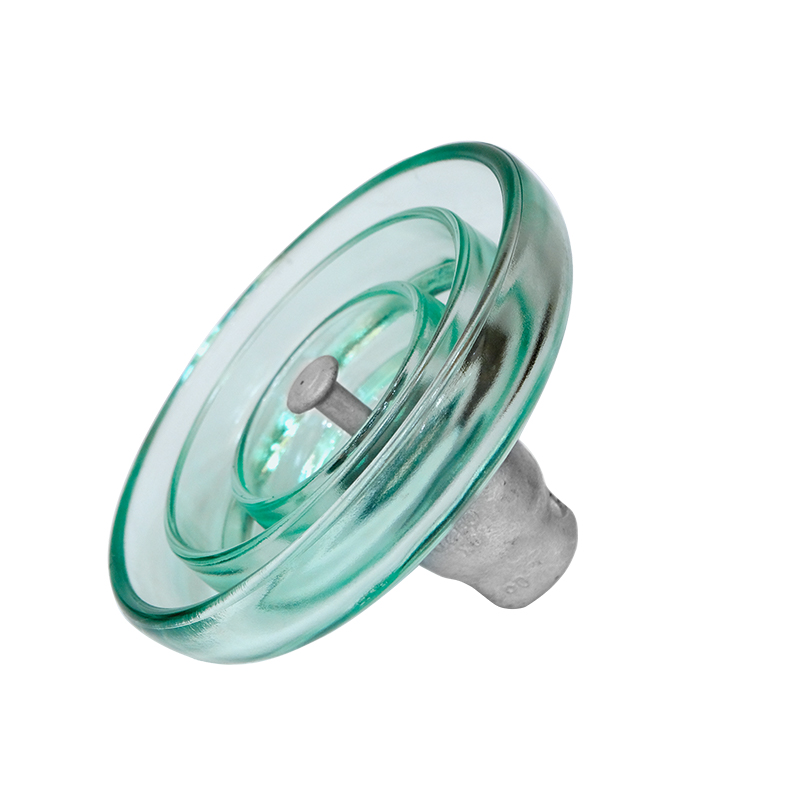
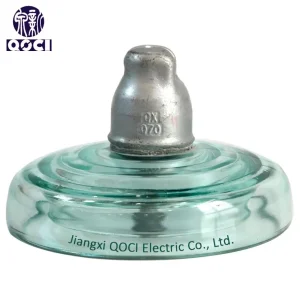
The fog type profile is characterized by long and widely-spaced under-ribs so as to avoid arc bridging between adjacent ribs. It features a leakage distance/spacing ratio of around 3.2 and is particularly effective in coastal areas (Salt fog) as well as in polluted areas where a higher specific leakage distance is required.
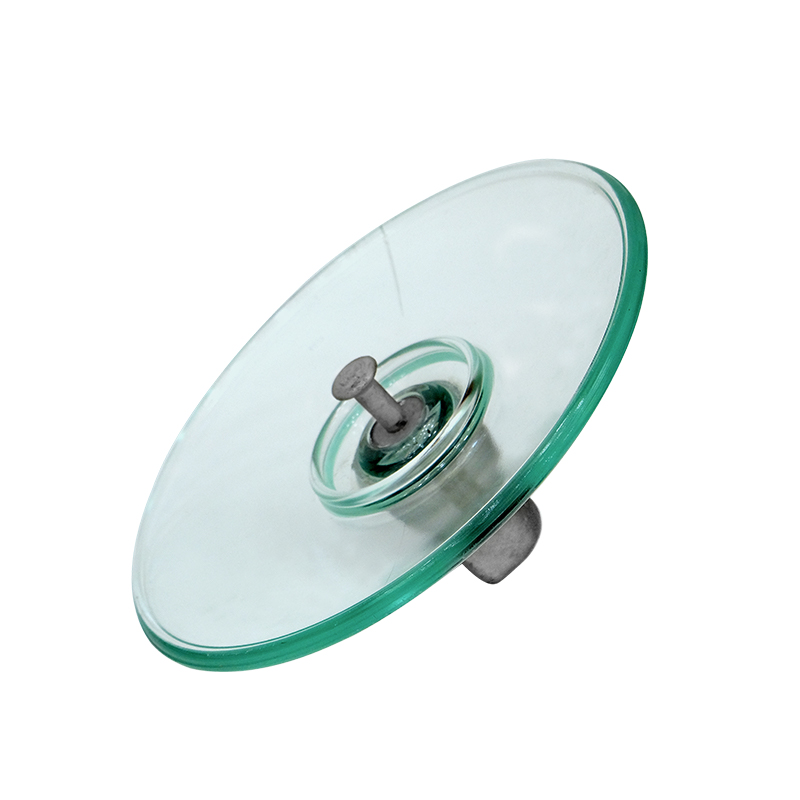
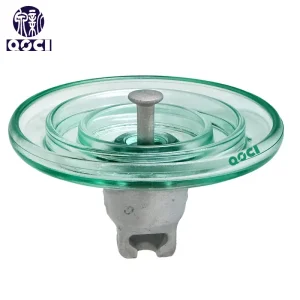
Design of insulating part with open profile is marked by absence of under-ribs and extended diameter of disk, with no under-ribs so as to avoid the accumulation of solid pollution deposits (dust, sand) on its lower surface. Open profile reduces pollutant accumulation on the surface. This design is effective in desert areas with wind and sand storm also can solve ice-bridging problems.
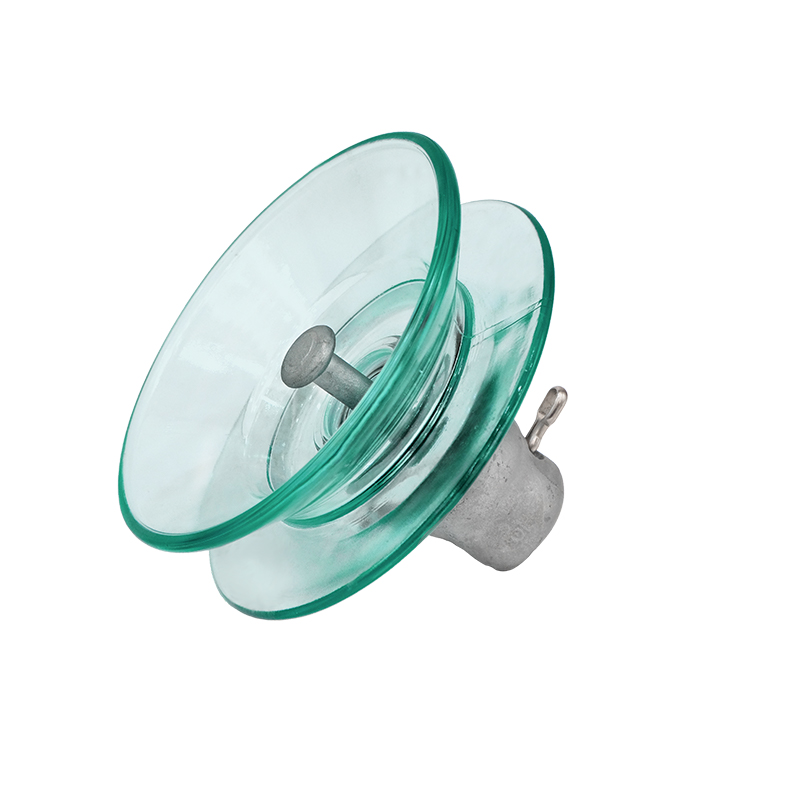
The design of the insulation part has two external ribs. The elimination of the under-ribs reduces pollution build-up, and the surface of the insulator can self clean by strong winds. And facilitate manual cleaning when necessary. This profile provides a leakage distance equivalent to the anti pollution profile.
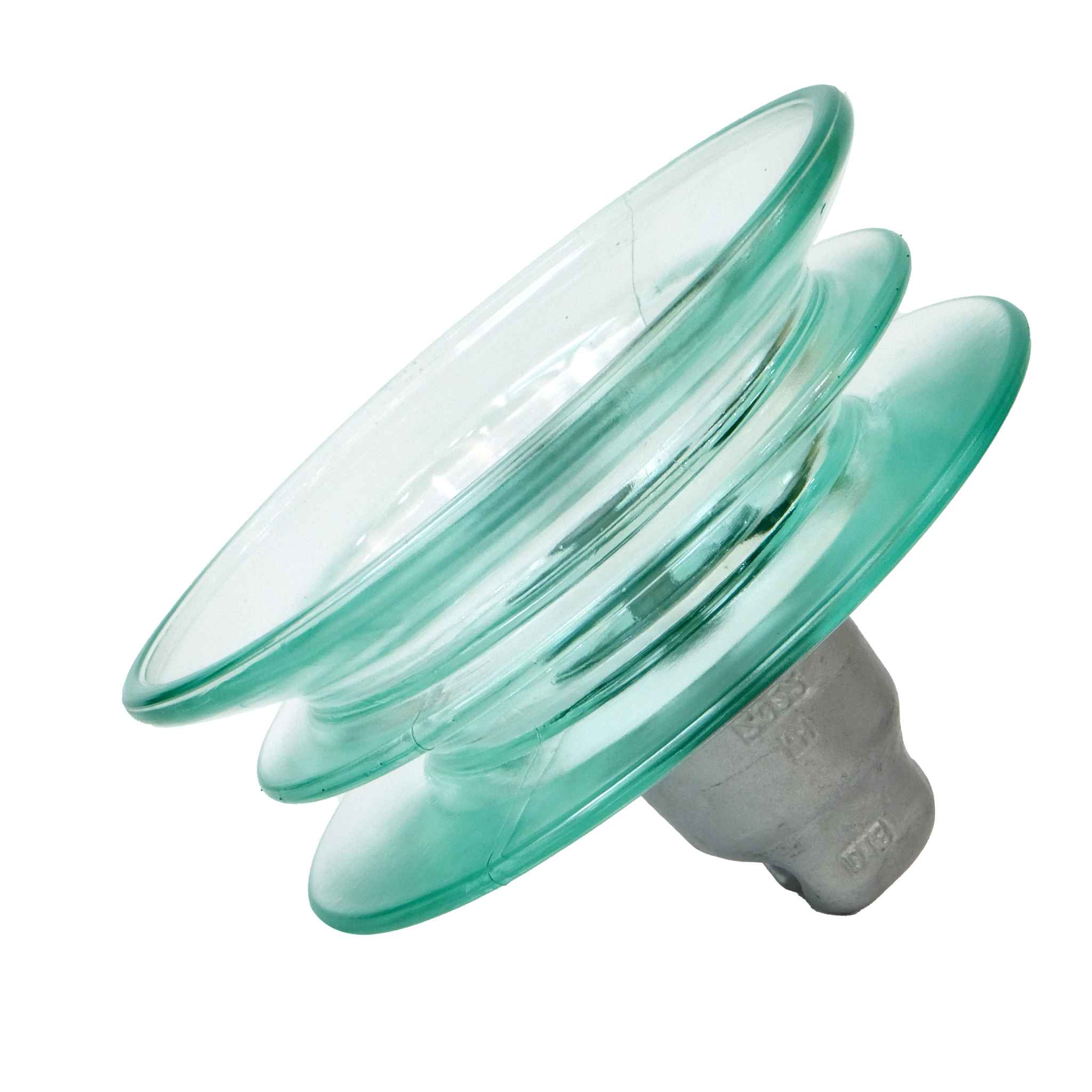
Triple-shed Type glass insulator is a key component in transmission lines, characterized by three layers of umbrella discs separated from each other on the insulation body. Thanks to this open shed design, they achieve self-cleaning during wind and rain while providing longer creepage distance for UHV lines.
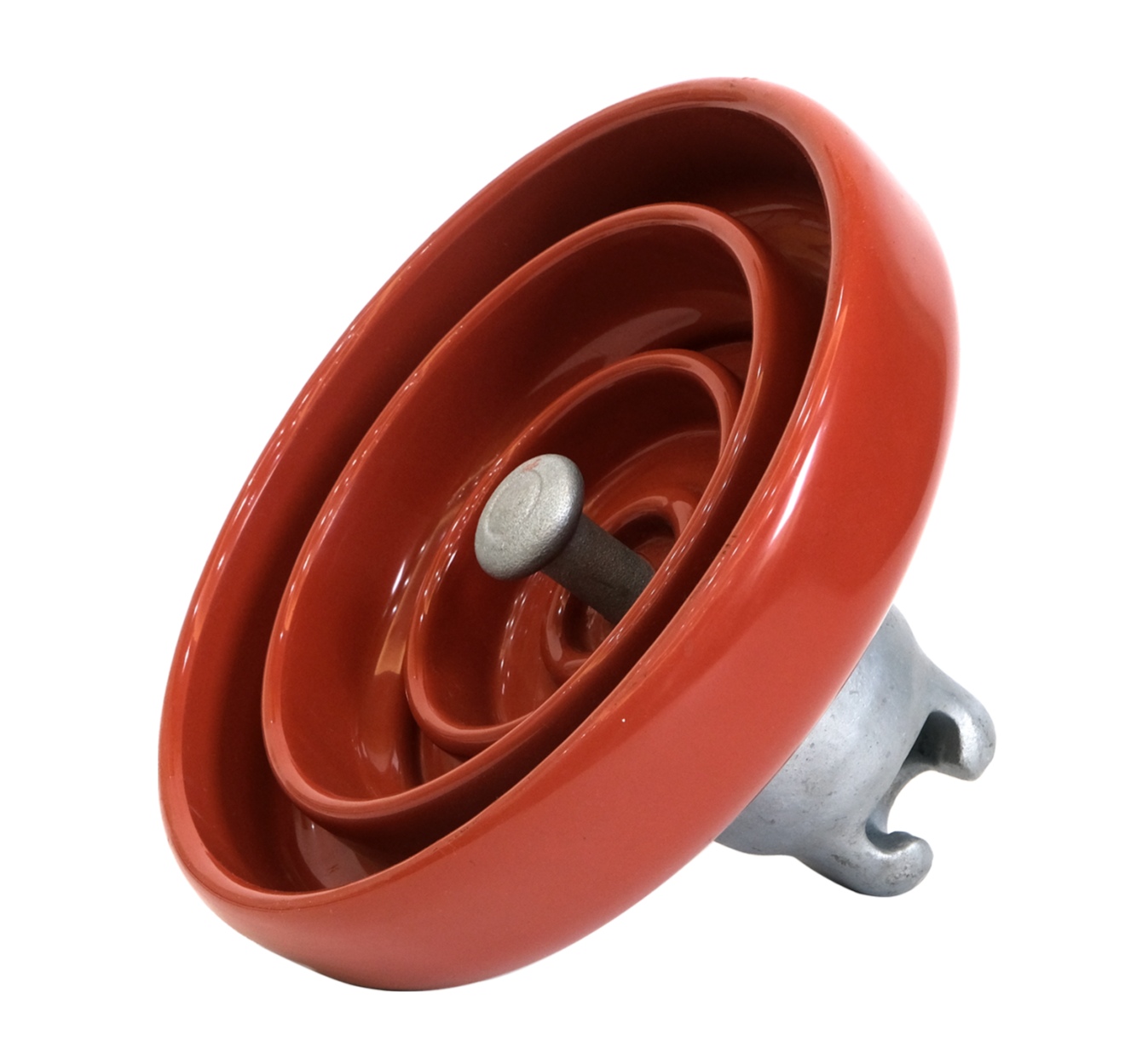
Silicone-coated insulators (Room Temperature Vulcanization - RTV) offer optimum performance in extreme pollution without requiring regular washing. Ground-wires profiles effectively guide lightning currents, reducing line damage and securing equipment safety.
Our products are mainly high-strength glass insulators used in low voltage, high voltage, ultra-high voltage, extra-high voltage AC (DC) electric transmission lines.
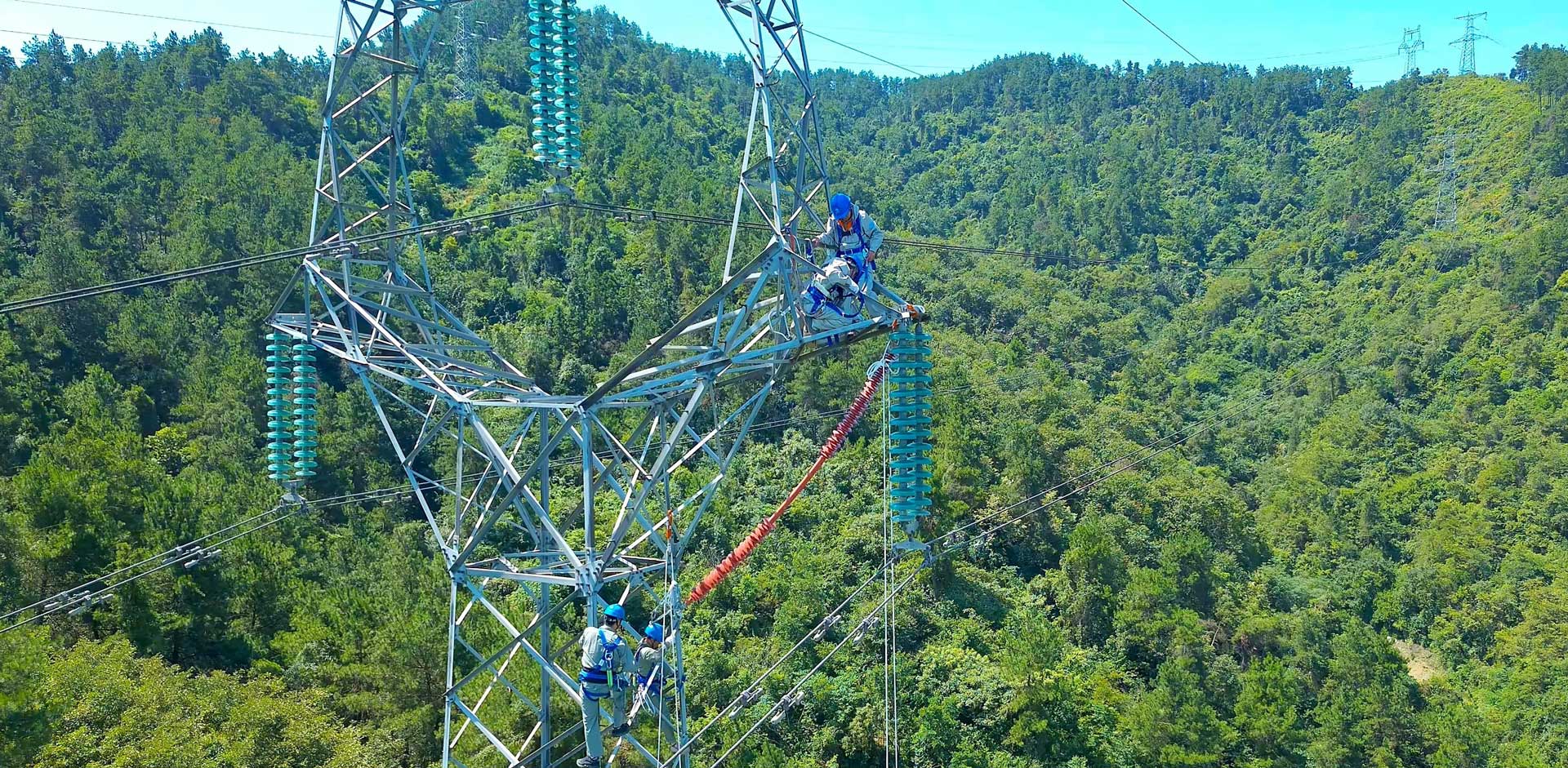
Proven reliability in coastal, desert, high-altitude, and sub-zero freeze operational zones.
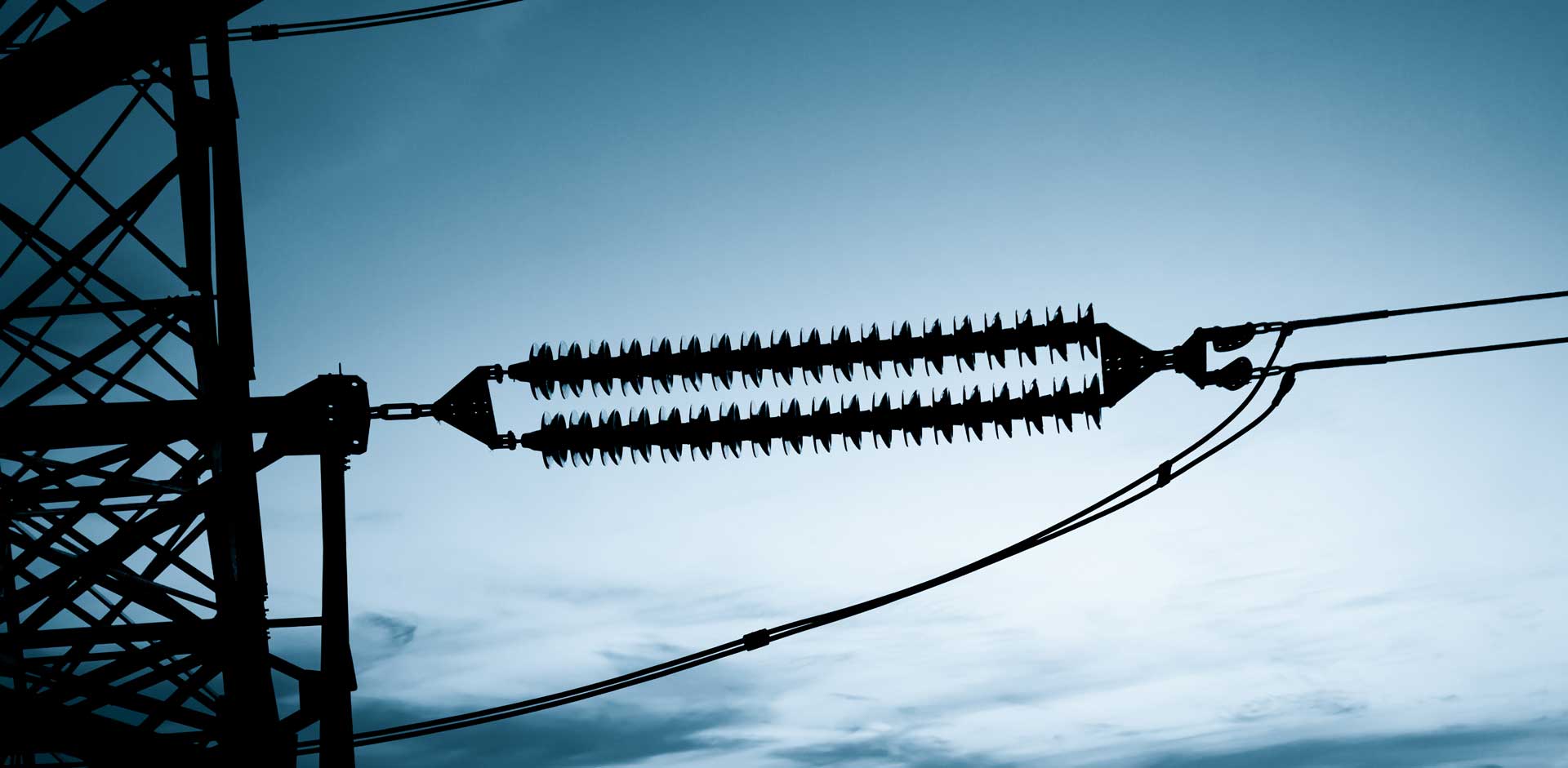
Heavy-duty isolation engineered for high thermal loads and extreme atmospheric overvoltages.
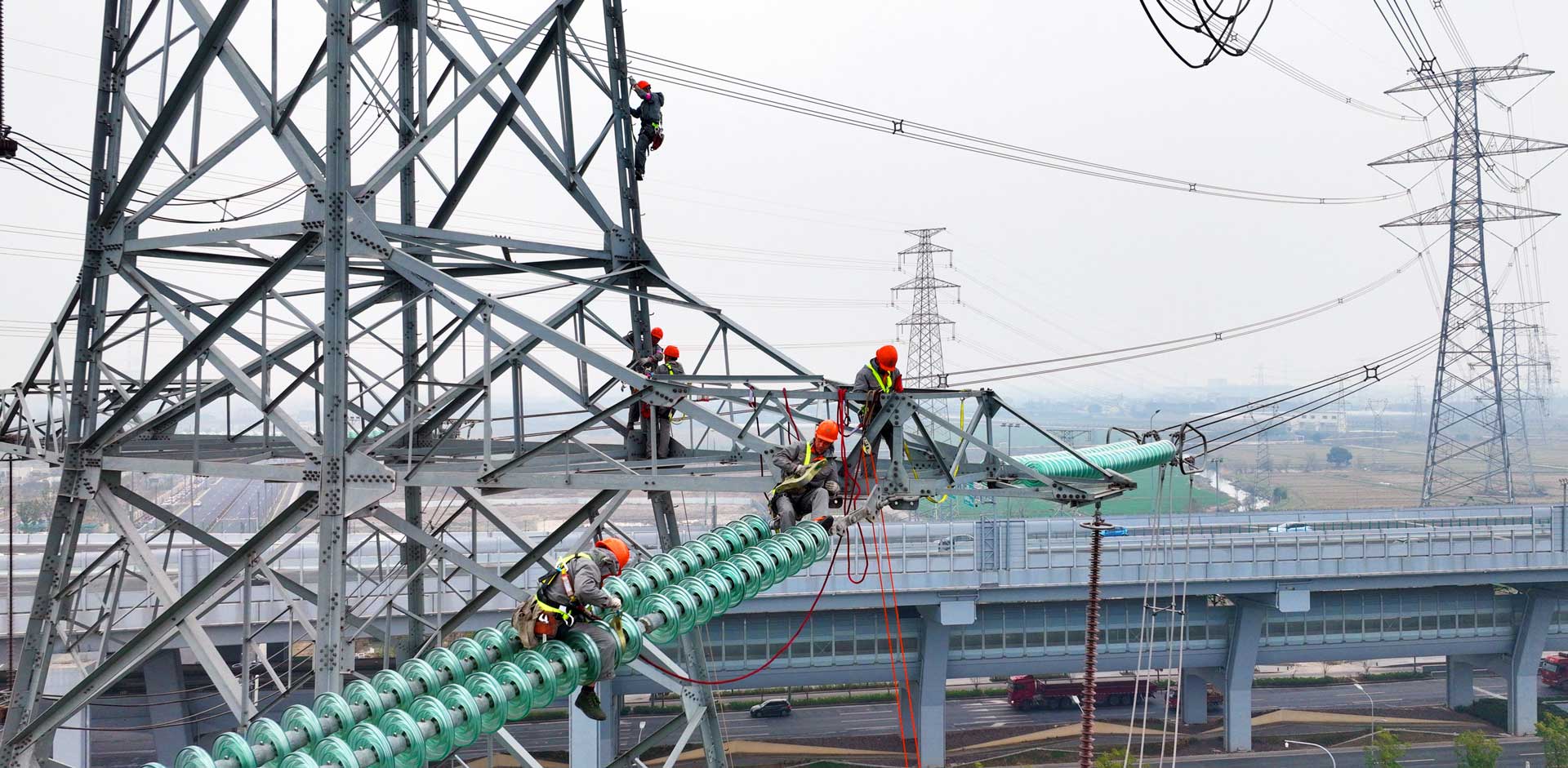
Tension strings, suspension strings, jumper supports, and substation busbar isolation.
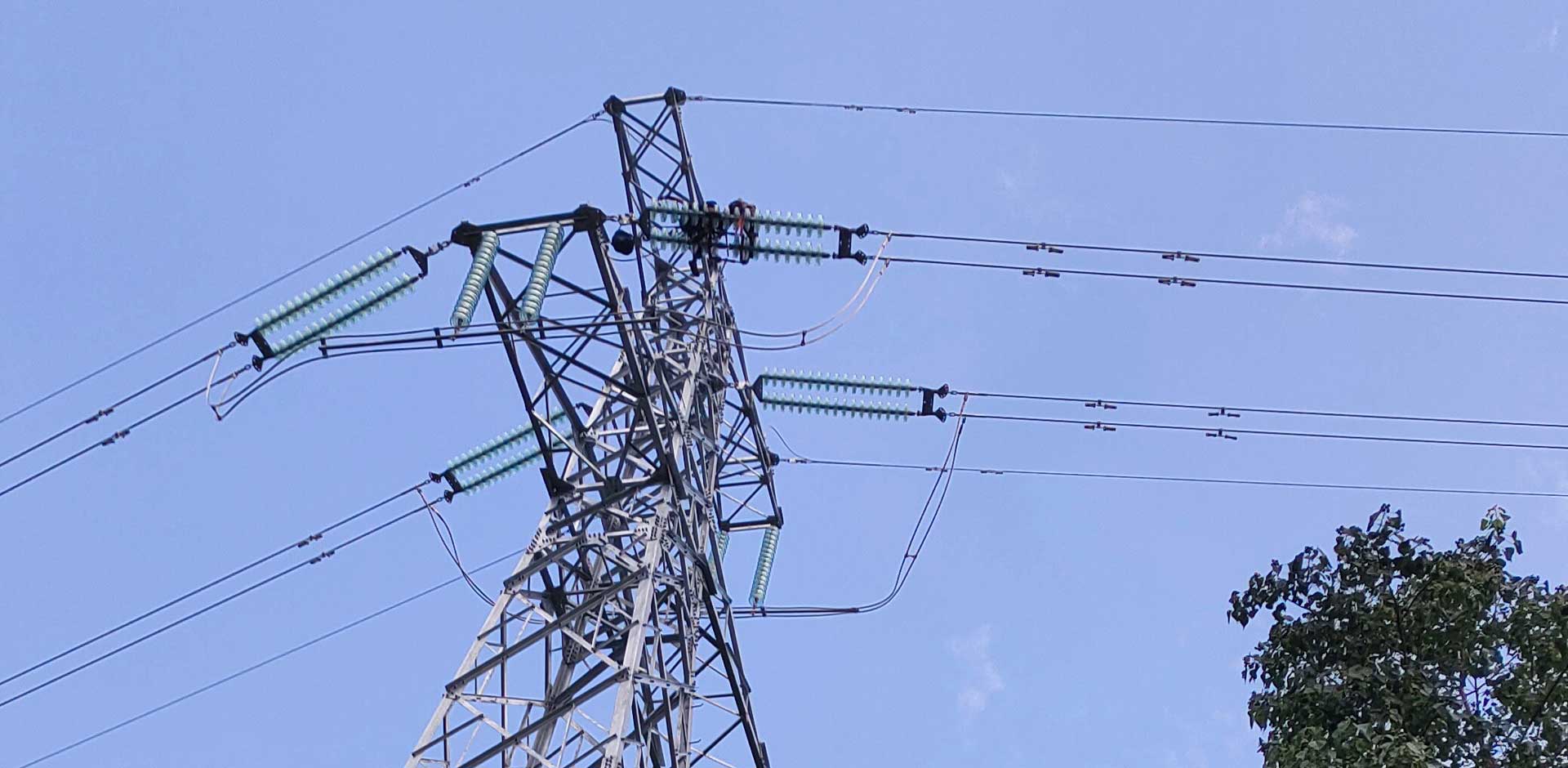
Electrified railway catenaries, heavy industrial smelting corridors, and mining grids.
Chinese Manufacture with fast delivery time and best competitive price. Serve the world-class power grid with dedication and actively participate in green energy construction.
Jiangxi QOCI Electric Co. Ltd was founded in Dec. 2002, with a registered capital of 508 million Yuan. The Corporation is located at Industrial Park, Luxi County, Pingxiang, Jiangxi Province, covering an area of 100 mu.
Responsibility is our guarantee of quality. We specialize in high-strength toughened glass insulators, serving global utilities and EPC contractors with uncompromising electrical safety standards.
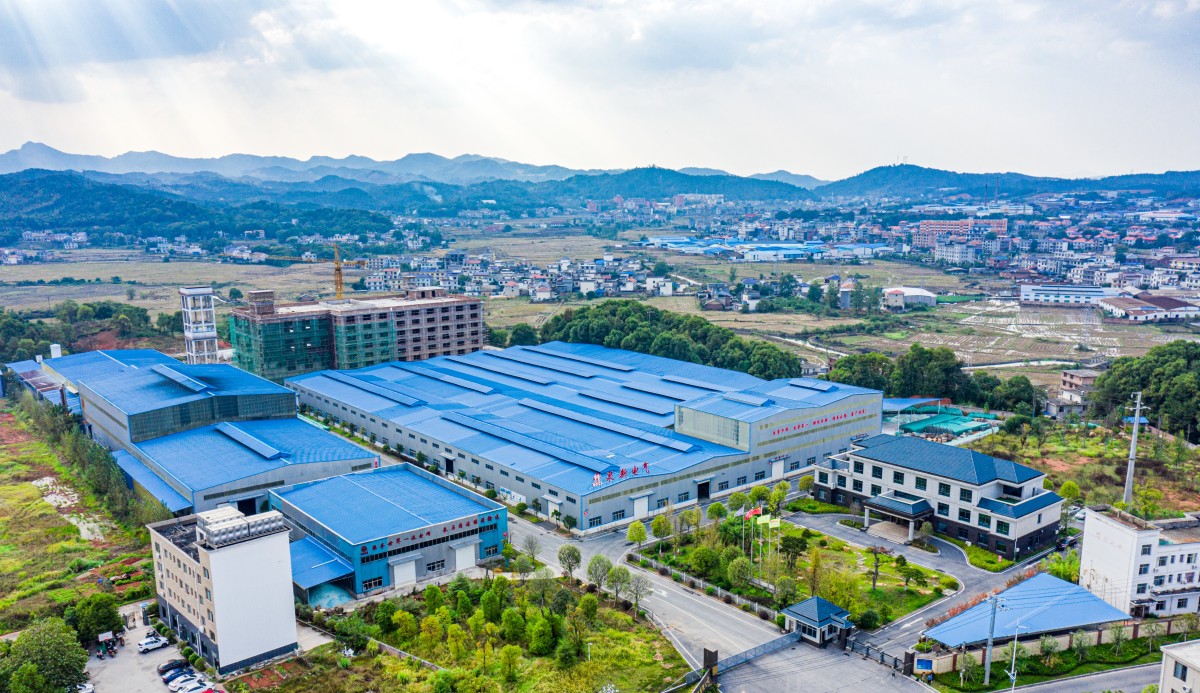
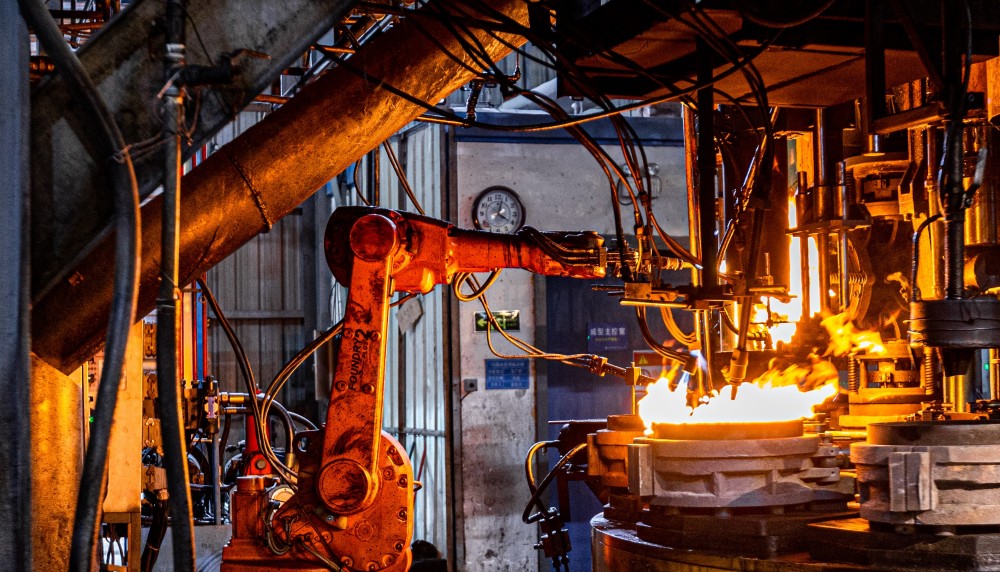
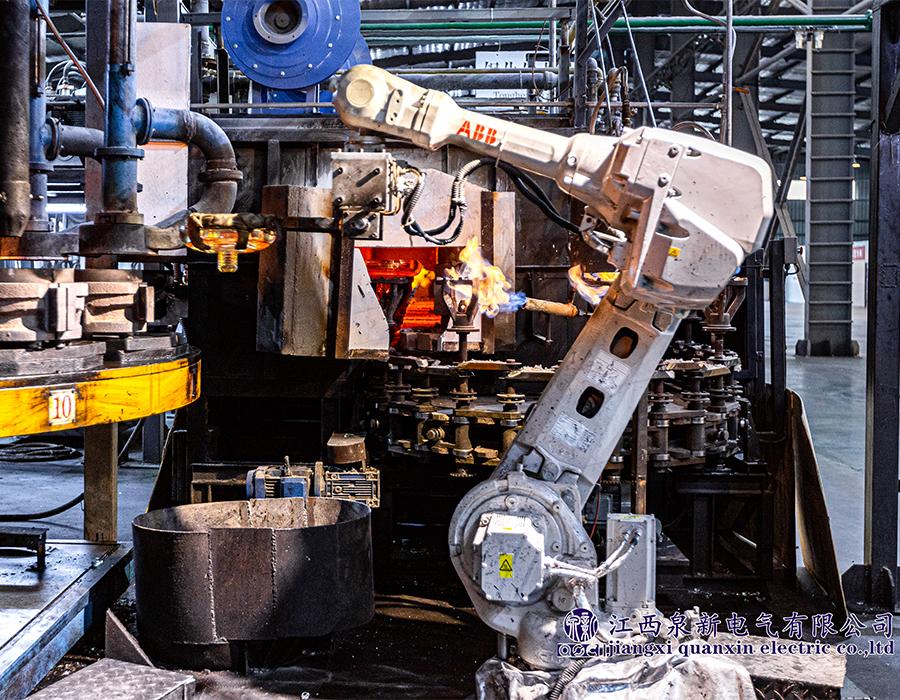
From total oxygen glass melting to robotic press forming and high-voltage dielectric testing, experience manufacturing accuracy engineered for zero-defect output.
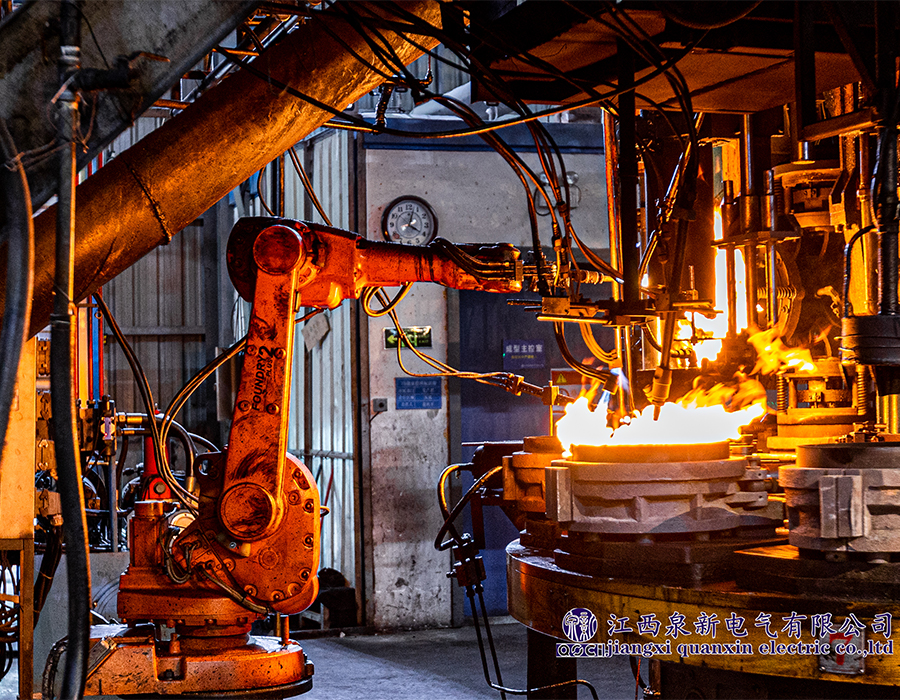
High-precision hydraulic presses ensure uniform glass shell density and exact dimensional adherence for ANSI 52-5 profiles.
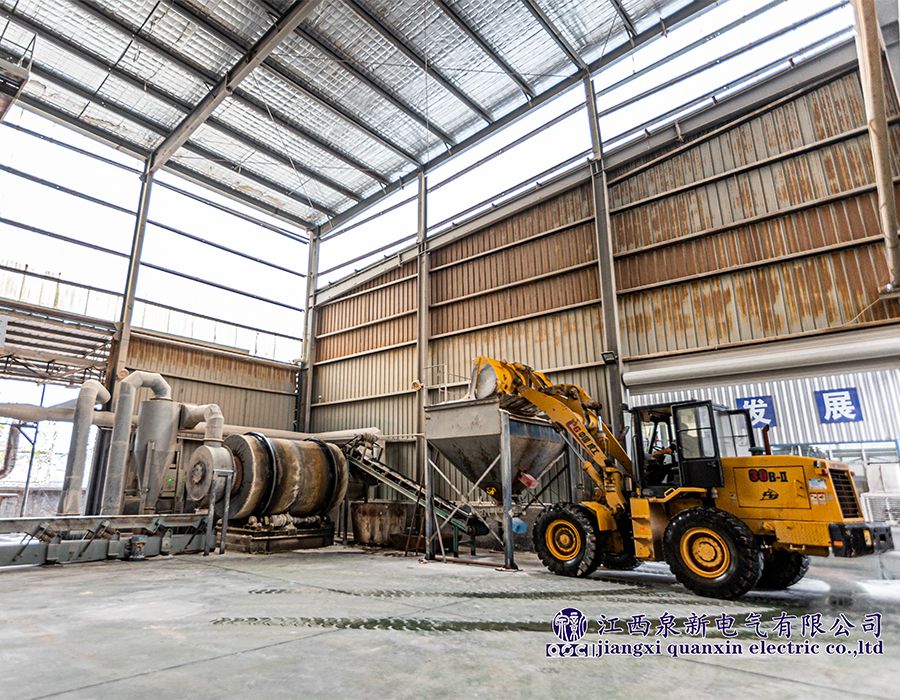
Computer-controlled batch mixing of ultra-pure silica sand, soda ash, and alumina to achieve optimal dielectric strength.
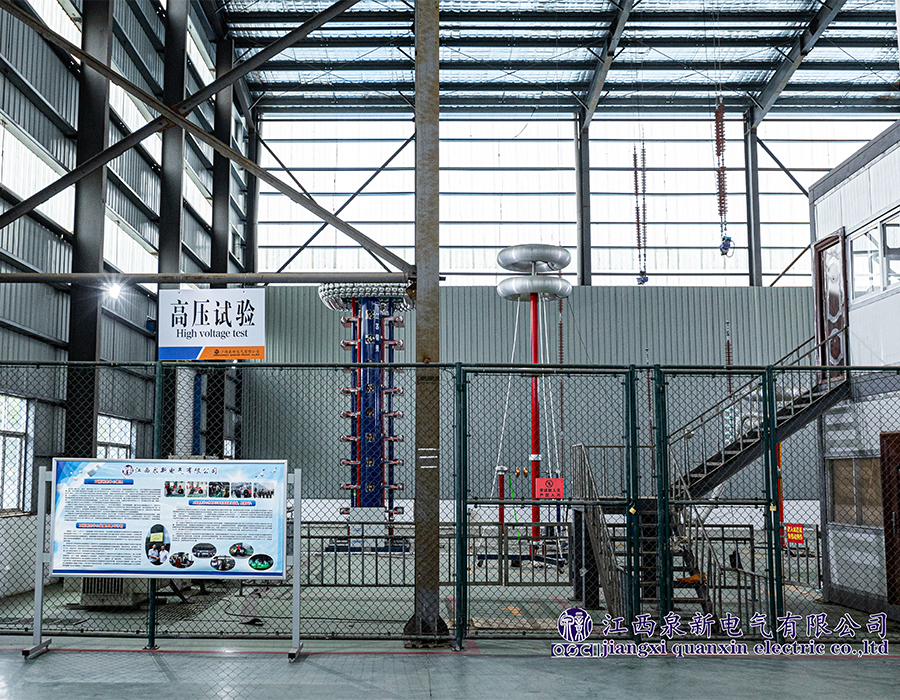
Every batch undergoes 100% routine thermal shock testing, mechanical routine pull tests, and dielectric impulse flashover verification.
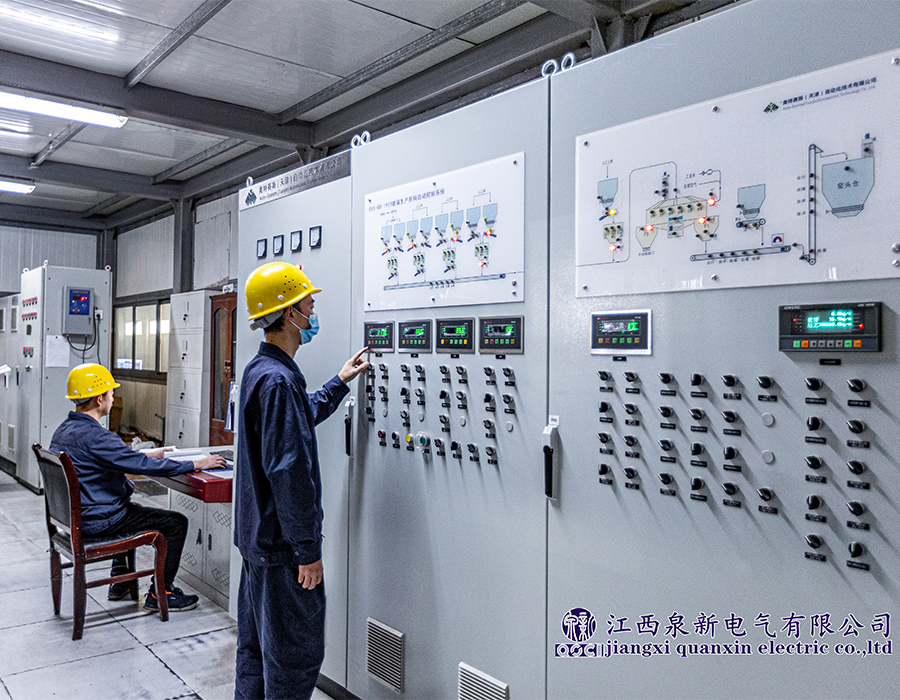
Strict incoming raw material quality checks guarantee glass shell purity and complete absence of micro-inclusions.
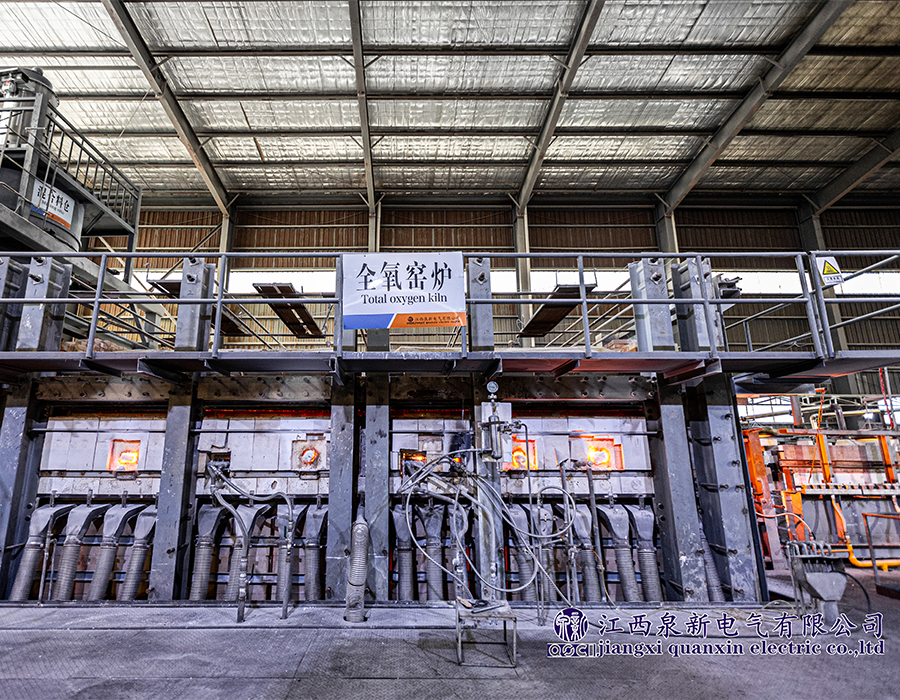
Advanced total oxygen glass melting furnace reducing carbon emissions while delivering crystal-homogenous molten glass.
Hot-dip galvanized malleable iron caps and drop-forged steel pins assembled with high-grade alumina cement.
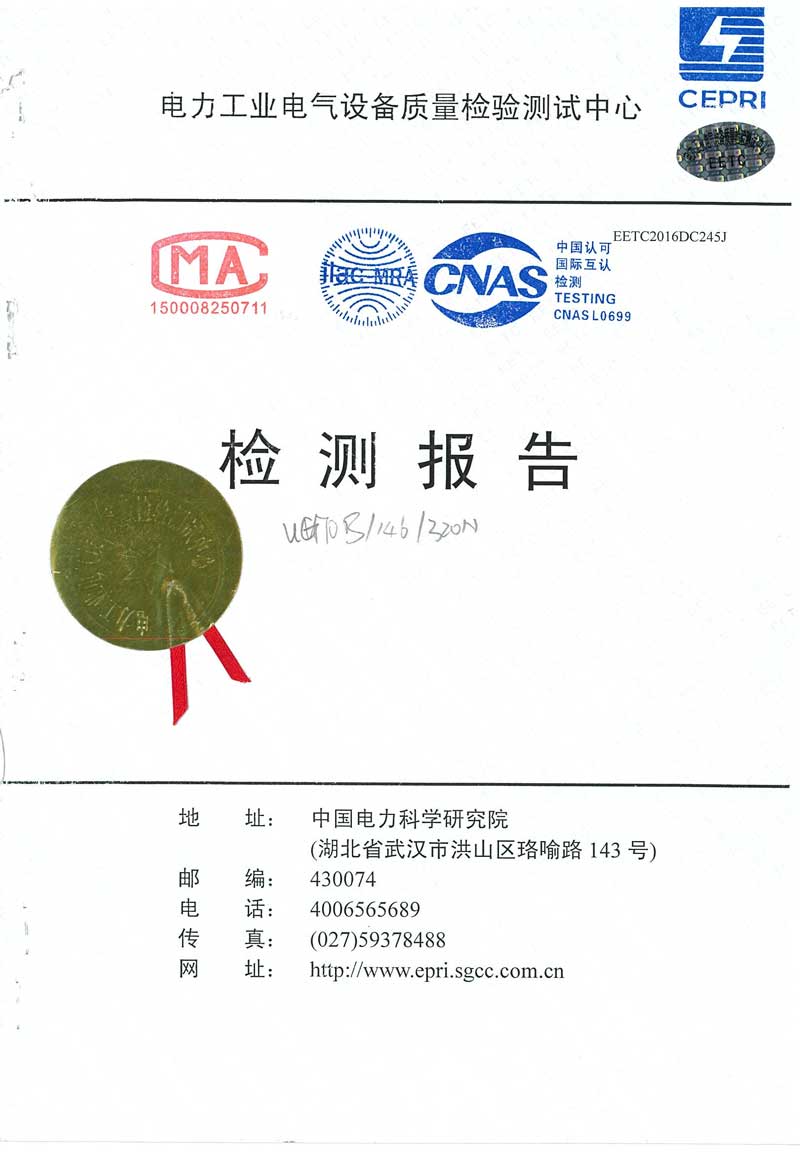
Fully certified under ISO9001, ISO14001, ISO45001, and independently type-tested according to ANSI C29.2 and IEC 60383 standard protocols.
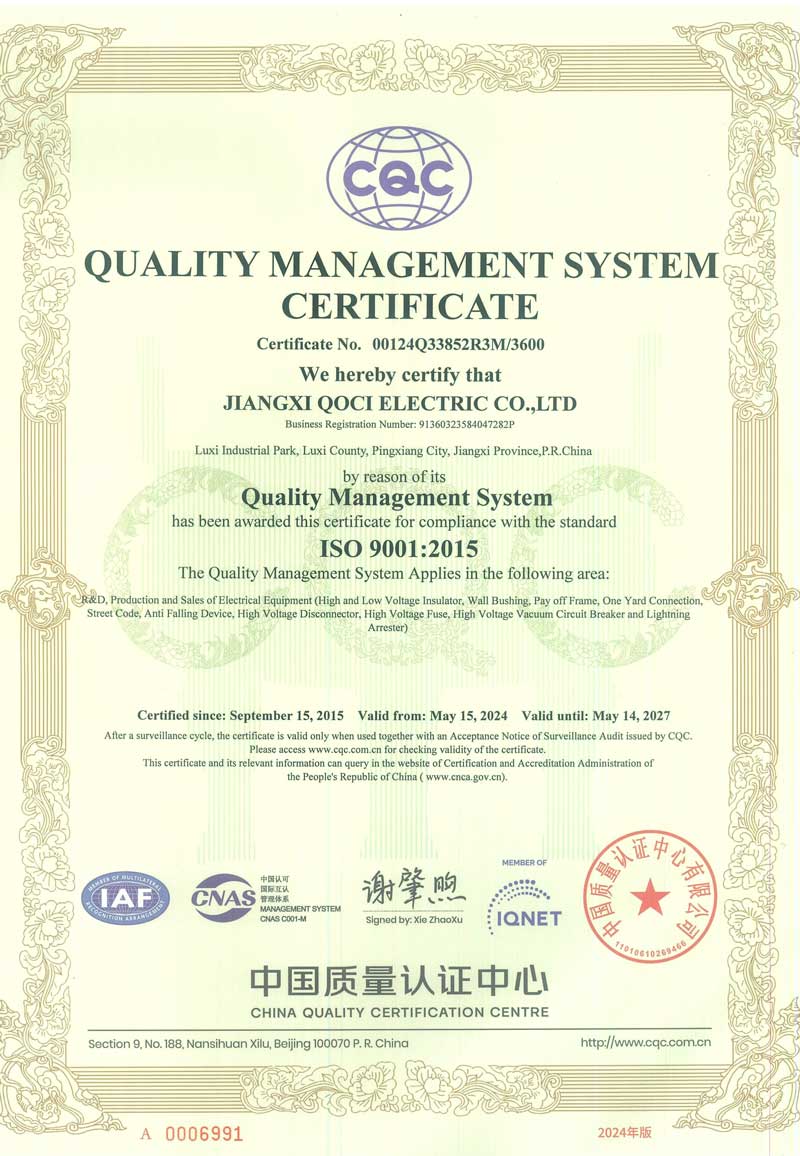
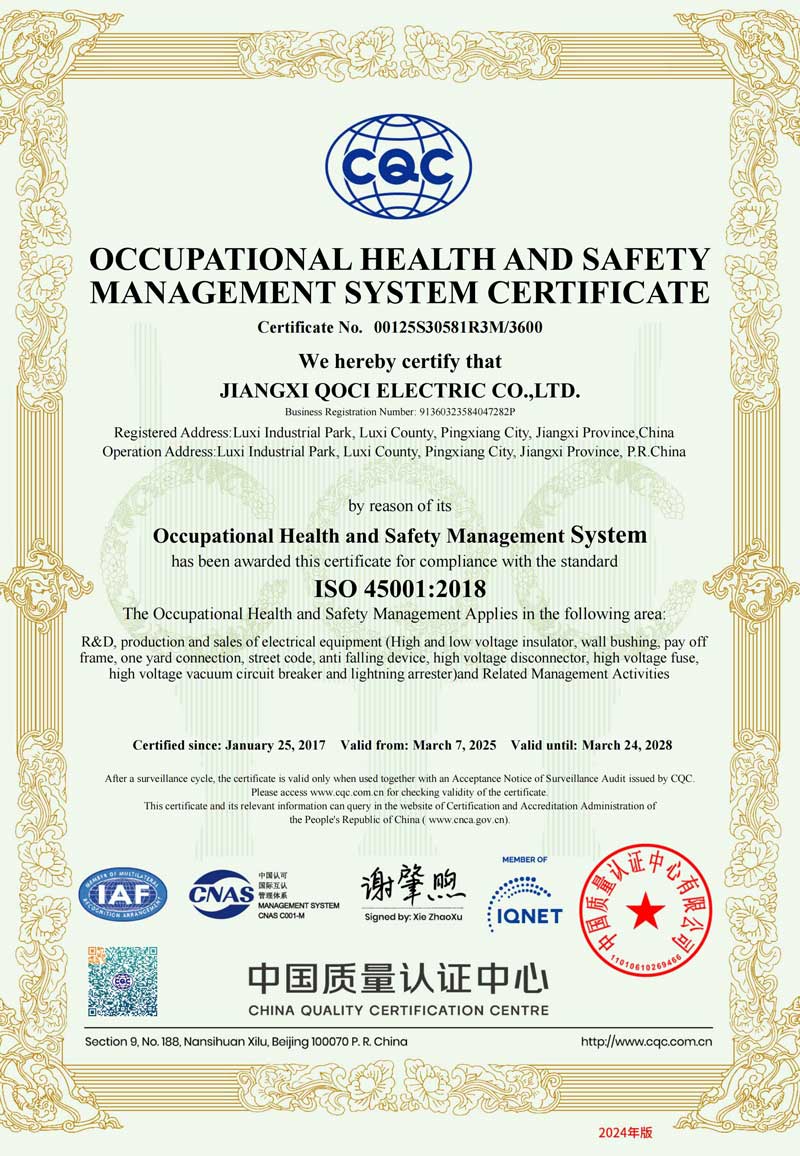
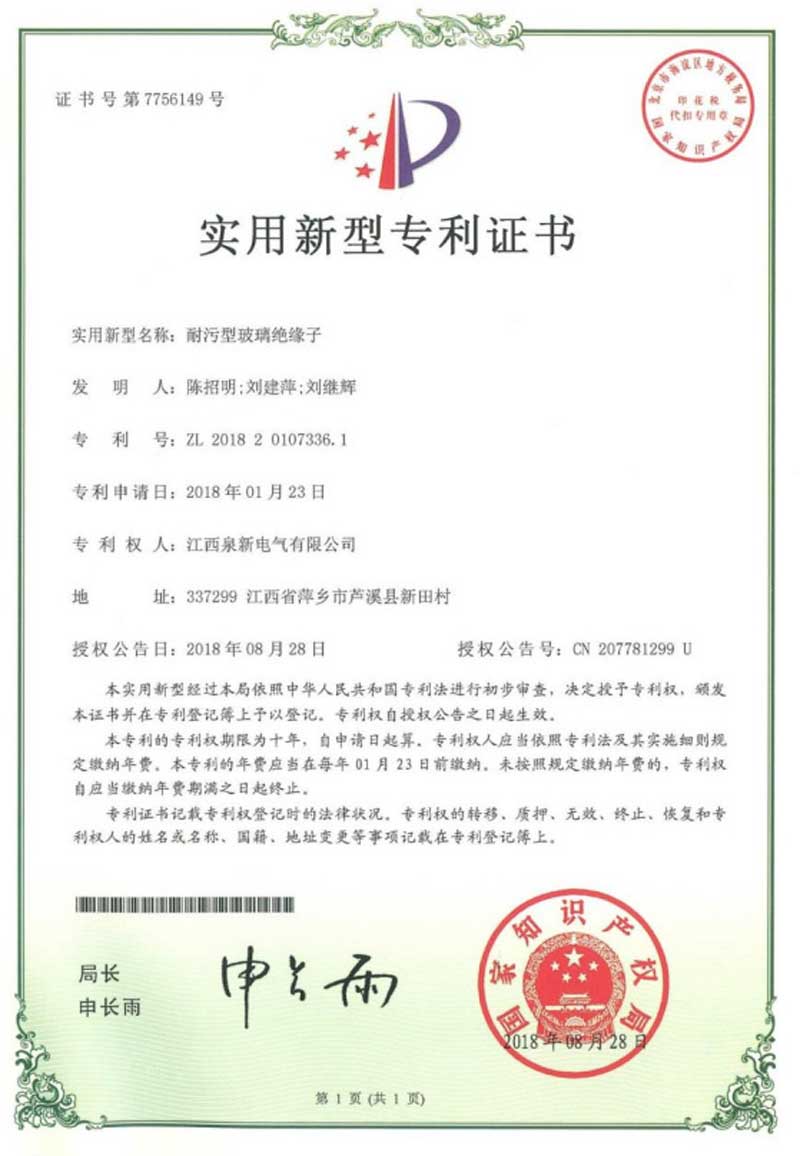
Trusted partner to major grid operators and contractors worldwide. Annual output capacity of 39,000 tons of high-strength glass insulators.

Stay informed about QOCI Electric’s latest international exhibitions, technological milestones, and power sector insights.
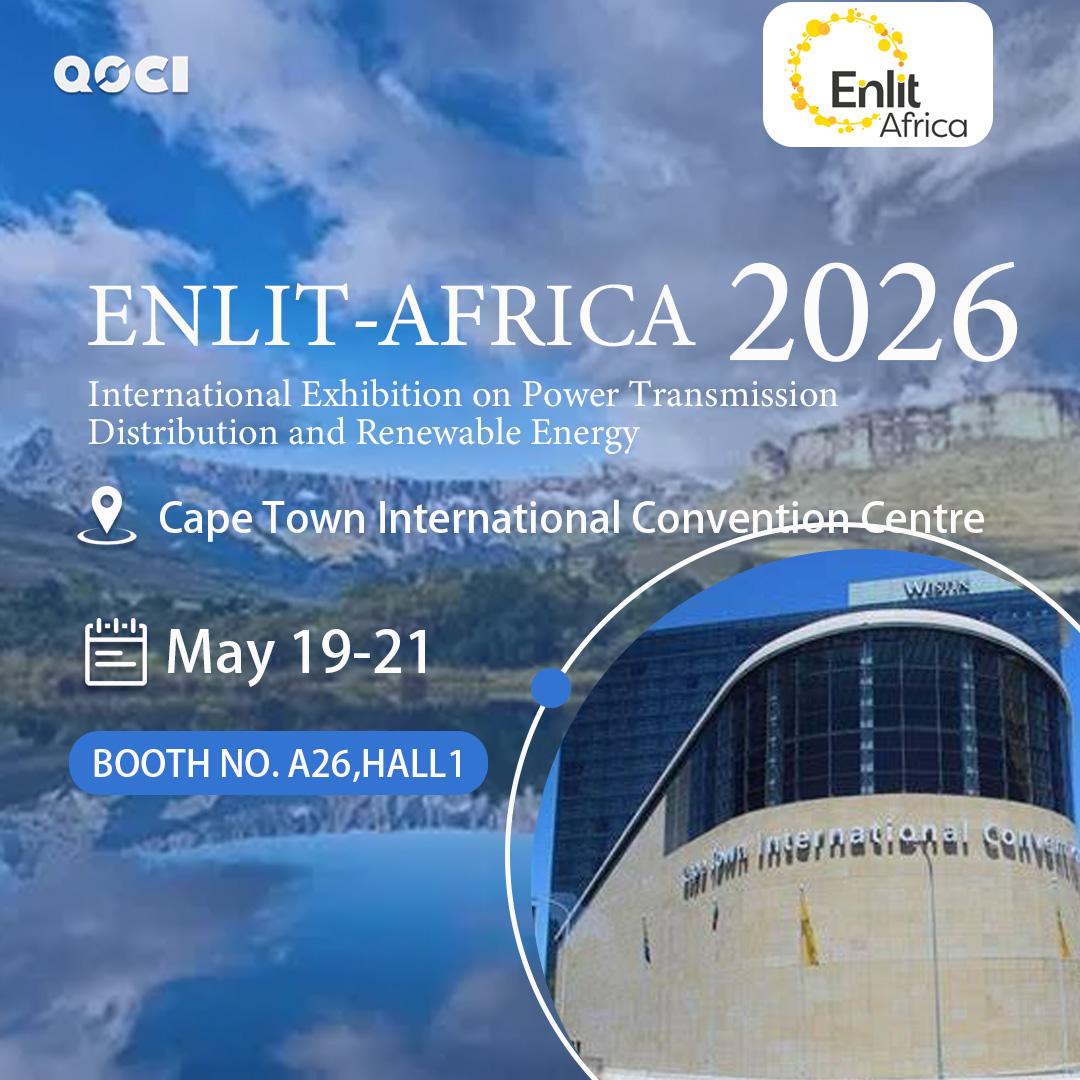 Upcoming Event
As the global energy transition accelerates, the importance of electricity, renewable energy, and energy storage technologies is becoming increasingly critical across African power grid developments.
Having withstood extreme environmental conditions including icing, high altitude, pollution, earthquakes and typhoons, China’s insulator industry provides unmatched reliability.
On behalf of our team at JIANGXI QOCI ELECTRIC CO., LTD, we encourage you to join us at IEEE PES T&D Conference & Exposition 2026, the powerhouse of power delivery.
QOCI Electric officially confirmed today that it will present its latest extra-high voltage toughened glass insulator technology at the upcoming Iraq Energy Expo.
Comprehensive answers to critical procurement, electrical design, and testing queries regarding ANSI 52-5 disc suspension insulators.
Toughened glass ANSI 52-5 insulators possess a highly compressive surface stress layer created through thermal quenching. If mechanical or electrical overload occurs, the glass shattered shell collapses into small granular pieces, leaving the inner core intact with residual mechanical strength over 80% of its nominal rating. Porcelain insulators can suffer hidden internal dielectric punctures that remain invisible to visual inspection, requiring costly live-line testing equipment.
Per ANSI C29.2 standards, an ANSI 52-5 insulator must achieve a minimum combined Mechanical & Electrical rating of 15,000 lbs (66.7 kN), a nominal shell disc diameter of 10 inches (254 mm), and a pin-to-cap unit height of 5-3/4 inches (146 mm). Standard low-frequency dry flashover voltage must reach at least 80 kV, and wet flashover must exceed 50 kV.
All malleable iron caps and drop-forged steel pins undergo hot-dip galvanizing according to ASTM A153 / ISO 1461. QOCI maintains a zinc coating thickness exceeding 610 g/m² (over 86 microns), guaranteeing more than 50 years of corrosion-free performance in coastal and industrial sulfur environment corridors.
Anti-fog profiles feature deep, widely spaced under-ribs that increase creepage distance up to 450 mm per unit, preventing arc bridging in heavy coastal fog or saline environments. RTV (Room Temperature Vulcanizing) silicone-coated glass insulators provide active hydrophobicity, causing water droplets to bead up rather than forming conductive film sheets, eliminating line washing in heavily polluted industrial areas.
QOCI Electric enforces a 3-tier inspection protocol: 1) Raw Material Batch Analysis, 2) 100% Thermal Shock Cycle Testing (hot-to-cold immersion) and 50% routine mechanical load pull testing, and 3) Sample Type Testing (Steep Front Impulse Wave Test, Piercing Test, and Thermal-Mechanical Performance Test per IEC 60383 / ANSI C29.1).
Discover our complementary range of high-strength suspension disc, post, and line hardware solutions for global power utilities.